With so many cleansers, toners, serums, moisturizers, and treatments available, building a daily skincare routine can feel confusing. Many people either use too many products, apply them in the wrong order, or struggle to follow a complicated routine consistently. This can make skincare feel time-consuming and may leave the skin feeling overwhelmed rather than comfortable and balanced.
There's no need to have a 10-step skincare routine, or half an hour's worth of products. The best routine is the one that you can stick to. Applying suitable daily care products can help keep the skin feeling fresh, comfortable, hydrated, and healthy-looking.
The proper sequence also gives each product a clear purpose. A cleanser removes the grime and dirt of the day, a toner refreshes and calms the skin, and a moisturizer helps keep the skin soft and hydrated. You can then add serums or other treatments for specific concerns without making your skincare routine unnecessarily complicated.
Why a Consistent Skincare Routine Matters?
Take the load off skin throughout the day and night from make-up, sun, oil, sweat and moisture in the environment. This is a procedure to wash away such impurities, replenish moisture and keep the barrier function of the skin intact. A simple routine will make it easier to follow on a regular basis.
Step 1: Begin With a Gentle Cleanser
With the body cleansed, it is ready for new beginnings. It can remove oil and sweat which accumulates overnight in the morning. It removes sunscreen, make-up, excess sebum, and impurities at night.
Opt for a cleanser that leaves your skin feeling clean and comfortable. Dry and sensitive skin will benefit from mild, hydrating formulas and oily or combination skin will appreciate a refreshing gel formula.
Apply cleanser to skin, spread lightly on skin and rub for 30-60 seconds, rubbing in circles. Focus on the area around the nose, hairline, and jaw where build-up can easily occur. Rinse off with lukewarm water and pat skin dry with a clean towel. Rough scrubbing and hot water are not required and may be uncomfortable on the skin.
Step 2: Refresh Your Skin With Toner
Toner is used in between cleansing and treatment products. Compared to traditional tonics, modern facial toners are designed to rejuvenate the skin, replenish moisture and ready the skin for subsequent treatments such as serums and moisturizers. They can also assist in eliminating leftover product residue from cleaning and improve the look of pores.
Select a skin-toner based on your skin's needs. Depending on your needs, a pore-refining toner can help smooth the appearance of your skin, and a gentle balancing one might be a good choice for daily use. Search for a formula that soothes and hydrates the skin, but not causes it to become dry or taut.
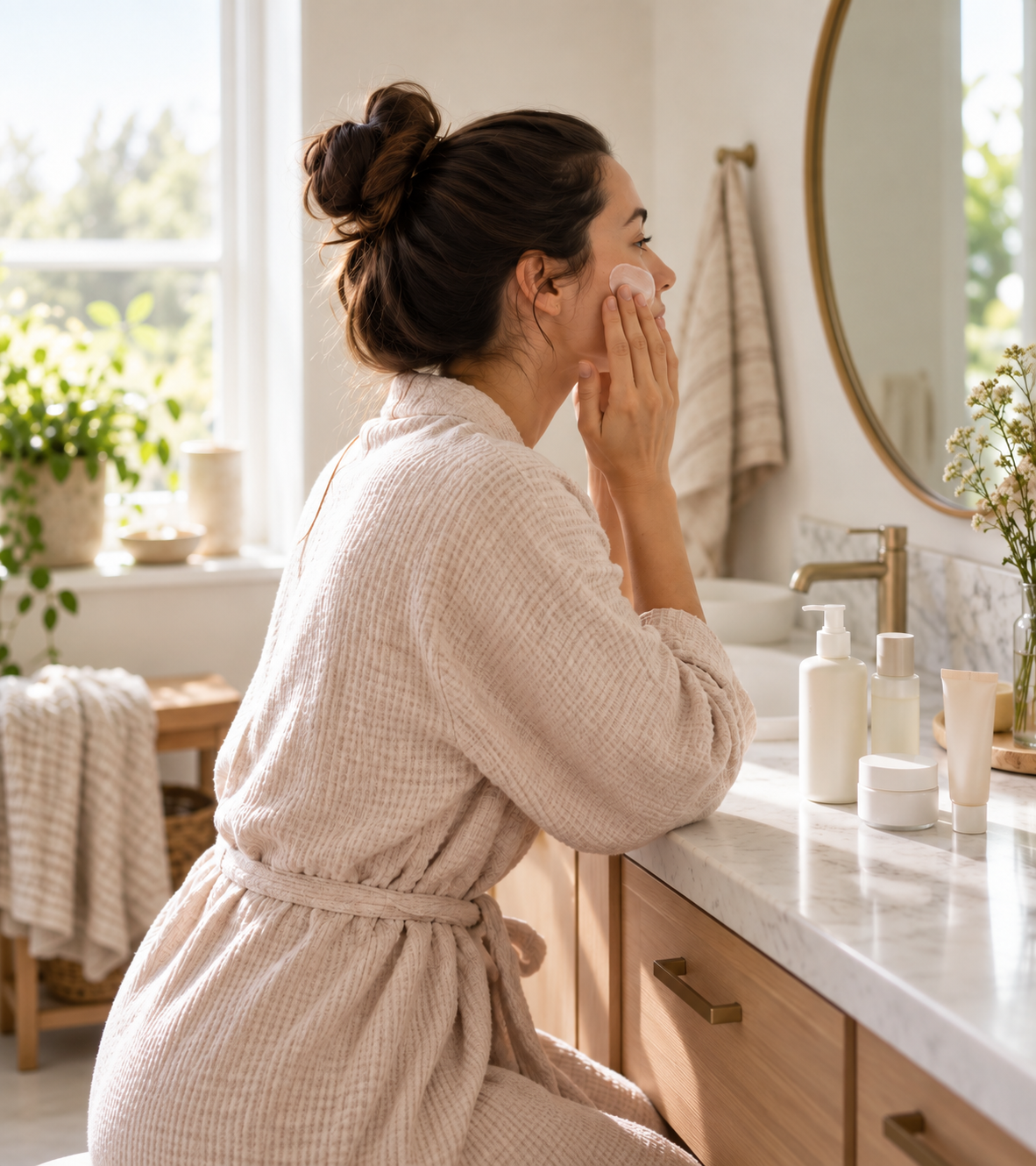
Apply toners by gently sweeping a small amount of the product on a cotton pad with your hands across your face. A few drops can also be applied to clean palms and gently rubbed into the skin. Toner should NOT be rinsed out. Let it soak before using it. Use once a day, if sensitive, and do a patch test first before using on your whole face.
Step 3: Apply a Targeted Serum if Needed
A serum is not a required step in a routine, but can be used to give the routine a specific effect. Lightweight hydration serums are formulated to deliver an extra hydration boost and can help create a softer, smoother and more comfortable complexion.
Once toned, apply a couple drops of your serum of choice to the face and neck. Apply it gently and/or smooth it into the skin. Typically, one serum will suffice, particularly for the beginning user. A serum that helps to keep skin hydrated, for instance, can help you achieve an extra layer of moisture, while a formula that brightens the skin can help you look radiant.
Add active formulas slowly and follow directions on the label. A simple routine, consistent routine, and a well-tolerated routine is generally easier to handle than a number of powerful ingredients being layered.
Step 4: Lock In Hydration With Moisturizer
To moisturize or not moisturize is important for any skin type, including oily skin. A good daily moisturizer can help minimize moisture loss, strengthen the barrier function and soften and smoothen the skin.
Choose the texture according to your skin’s needs and personal preference. Some gel-based creams are also a good option for oily or combination skin, while other thicker creams are better suited for dry skin. Peptide moisturizers can be used alongside firm and smooth-looking skin care regimen and simple hydrating creams provide a good everyday moisturizer.
Use a small amount of moisturizer on top of the serum after over face and neck. Can be used when skin is slightly moist to help retain moisture. In the morning, allow the moisturizer to absorb before applying sunscreen or makeup. For night time use, the same formula can be used or one that is richer in cream if the skin is dry.
Step 5: Finish Your Morning Routine With Sunscreen
Sunscreen is just the last step in the day care regime. Use a broad spectrum sunscreen on face, neck, ears and other exposed skin with an SPF of 30 or higher.
Sunscreen protects skin from the damaging effects of the sun's ultraviolet rays that can cause uneven skin tone and evident signs of sun damage. Use sunscreen to protect skin after moisturizing, but before applying makeup. Re-apply as directed on the label, particularly if outside, sweating or swimming.
A Simple Morning and Evening Routine
Your morning routine can remain quick and practical:
Cleanser
Toner
Optional serum
Daily moisturizer
Broad-spectrum sunscreen
Your evening routine focuses on removing the day’s buildup and restoring comfort:
Makeup remover, if needed
Cleanser
Toner
Optional serum or treatment
Moisturizer
How to Choose Products for Your Skin Type
Dry skin: Try creamy cleansers, gentle toners, hydrating serums and nourishing moisturizers. You can use moisturizers on slightly moisturized skin, which can make your skin feel softer and more comfortable.
If you have oily skin, then you should use oil absorbing face wash that doesn't tighten your skin. An invigorating toner and a light gel moisturizer can help to hydrate without leaving any heavy residue. Skin that tends to be oily will still require moisture.
In the case of combination skin, opt for light layers that replenish dry spots and don't overpower the T-zone. A little more moisturizer can be used in drier areas.
In the case of sensitive skin, maintain a simple skin care regimen. Use gentle products, add one new formula at a time and do a patch test first. Discontinue use of products that burns, itches or reddens continuously and see a dermatologist if needed.
Tips for Better Results
Allow a new routine to become a habit. Make sure products are stored together and used in the same sequence every day. Do not test more than one formula at a time because it will be hard to determine if your skin is responding to any one product or multiple products.
Change your moisturising cream (or lotion) depending on the weather. The light formula can be more comfortable on hot or humid days, and the rich formula can be more comforting in cold and dry weather. Be mindful of your skin and see a dermatologist if you continue to have ongoing acne, redness or irritation.
Final Thoughts
A good morning skincare regimen is simple, balanced and easily followed. Start using a mild cleanser, then a toning product, a targeted serum and then moisturizer. In the day, finish with a wide-spectrum sun cream.
Select formulas that are appropriate for your skin type, your preferences and your skin's needs. A well-designed regimen can help achieve fresh, smooth and hydrated, naturally radiant skin with regular use. Results can vary.
Frequently Asked Questions
1. What is the best basic daily skincare routine?
A simple routine includes cleansing, toning, moisturizing, and applying sunscreen in the morning. You can add a serum based on your specific skincare goals.
2. Should I follow a skincare routine every day?
Yes. Following a consistent morning and evening routine can help keep your skin clean, hydrated, balanced, and healthy-looking.
3. Do I need to use toner after cleansing?
Toner is optional, but it can refresh the skin, provide light hydration, and prepare your complexion for serums and moisturizers.
Sources :
Moisturizers: The Slippery Road
https://pmc.ncbi.nlm.nih.gov/articles/PMC4885180/
Cleansing without compromise: the impact of cleansers on the skin barrier and the technology of mild cleansing
https://pubmed.ncbi.nlm.nih.gov/14728695/
Sunscreens and Photoprotection