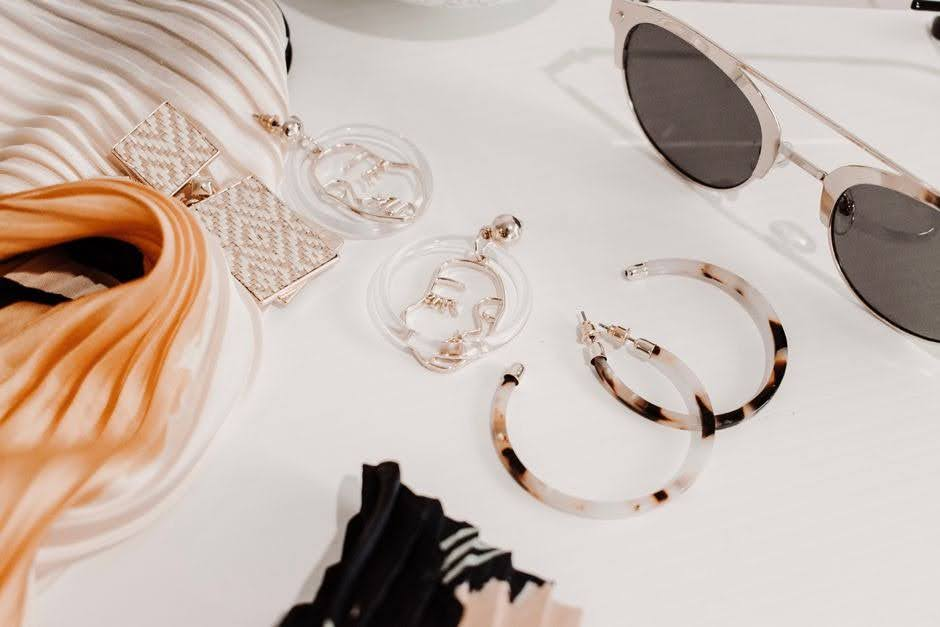
Most people have bought a piece of jewelry that looked wonderful in the shop and turned dull, green, or broken within a season. The frustrating part is that price alone rarely explains what happened. Plenty of expensive pieces are built with thin plating and weak joins, while far cheaper pieces hold their color and shape for years. What separates the two is not the label or the display case. It is the material underneath, the way the piece is put together, and the small details that most shoppers never think to check.
Learning to read those details is a skill anyone can pick up in an afternoon. Once you know what to look at, you can judge a necklace or a ring in about thirty seconds, in a store or from a product photo, and spend your money where it actually buys something lasting.
Where Quality Information Usually Goes Missing
The hardest part of buying well is that the useful facts are often the ones nobody tells you. A tag may say gold tone or silver finish without saying what metal sits beneath it, and a friendly sales pitch is no substitute for a clear material description. Anyone buying in volume, whether for a small shop or a market stall, runs into a sharper version of the same problem: a wholesale jewelry website that lists only a picture and a price leaves a buyer guessing about the metal, the plating, and how the piece will hold up after a month of wear. What solves this is a supplier that sells in bulk online and publishes the full specification for every item, including the base metal, the finish, the weight, and the dimensions. Buyers who want that level of detail before committing to a purchase can compare listings on a wholesale jewelry website and see exactly what they are ordering.
Start With the Base Metal, Not the Color
Color is a finish. Metal is the piece. Two rings can look identical on a shelf and behave completely differently on your hand, because one is built on surgical-grade stainless steel and the other on a soft mixed alloy that bends under pressure and reacts with skin.
Stainless steel is the workhorse of affordable jewelry. It resists rust, holds its shape, and does not tarnish in the way that cheaper alloys do. Sterling silver is softer and will darken over time, but it polishes back to brightness and is a genuine precious metal rather than a coating. Tungsten is extremely hard and keeps a polish almost indefinitely, though it cannot be resized. Brass and mixed pot metals sit at the bottom of the range, and while they can look beautiful when new, they are the pieces most likely to discolor skin and lose their finish quickly.
Understand What Plating Actually Means
A great deal of gold-colored jewelry is not solid gold, and that is perfectly fine as long as you know which kind of gold coating you are buying, because the differences are enormous.
Standard plating lays a very thin layer of gold over a base metal. It looks convincing, and it wears off, sometimes within weeks at the points of friction. Gold-filled is a different process entirely: a thick layer of gold is bonded to the core, giving a surface many times heavier than plating, which is why gold-filled pieces survive daily wear so much better. There is also a modern coating process that bonds the color to the metal at a molecular level, producing a finish that resists scratching and fading far more stubbornly than ordinary plating.
The practical rule is simple. For anything you plan to wear every day, especially rings and bracelets that rub against surfaces constantly, pay attention to how thick the gold layer is rather than how bright it looks in the photograph.
Check the Parts That Do the Work
Clasps, jump rings, and earring posts fail long before the main body of a piece does, and they are the easiest thing to inspect.
Open and close a clasp a few times. It should move with a clean, definite action rather than feeling loose or gritty. A lobster clasp with a strong spring is a good sign. A weak spring, or a clasp that does not fully close, means the necklace will eventually end up on the floor without you noticing.
Look closely at the jump rings, the small circles that connect a pendant to a chain. If you can see a visible gap where the ring meets itself, that ring will open under tension. Soldered or tightly closed rings are the mark of a piece that was assembled with care.
For earrings, the post matters more than the design. A post that flexes easily will bend out of shape, and a nickel-heavy post is the usual culprit behind sore, irritated ears.
Feel the Weight and Look at the Finish
Weight tells you a great deal. A hollow chain and a solid one can look the same in a picture, but the solid one has substance in the hand. Very light pieces are not automatically bad, since some designs are meant to be delicate, but a chunky-looking ring that feels like plastic is hollow or made from a very soft metal.
Then hold the piece up to a strong light and turn it. Good finishing shows as an even surface with no pitting, no rough edges around the inside of a ring, no cloudy patches near joins, and no visible glue. Stones should sit level in their settings, with prongs that press down firmly rather than standing upright and loose. Any stone that rattles slightly will be gone before long.
Make It Last Once You Own It
Even the best-made piece will look tired if it is treated carelessly, and most damage comes from ordinary daily habits rather than accidents.
Put jewelry on last, after perfume, hairspray, lotion, and sunscreen have dried. These products are the quickest way to strip a finish. Take pieces off before swimming, showering, exercising, and cleaning, since chlorine, salt, sweat, and household chemicals all attack coatings and soften stones.
Store items separately rather than piled in one box, because the scratches that dull a finish usually come from other jewelry. A soft pouch for each piece costs almost nothing. Wipe everything down with a dry, soft cloth after wearing it, which removes the sweat and oil that cause tarnish before it has a chance to build up.
Do all of this, and inexpensive jewelry will keep looking good long after pricier pieces have been quietly retired to a drawer.