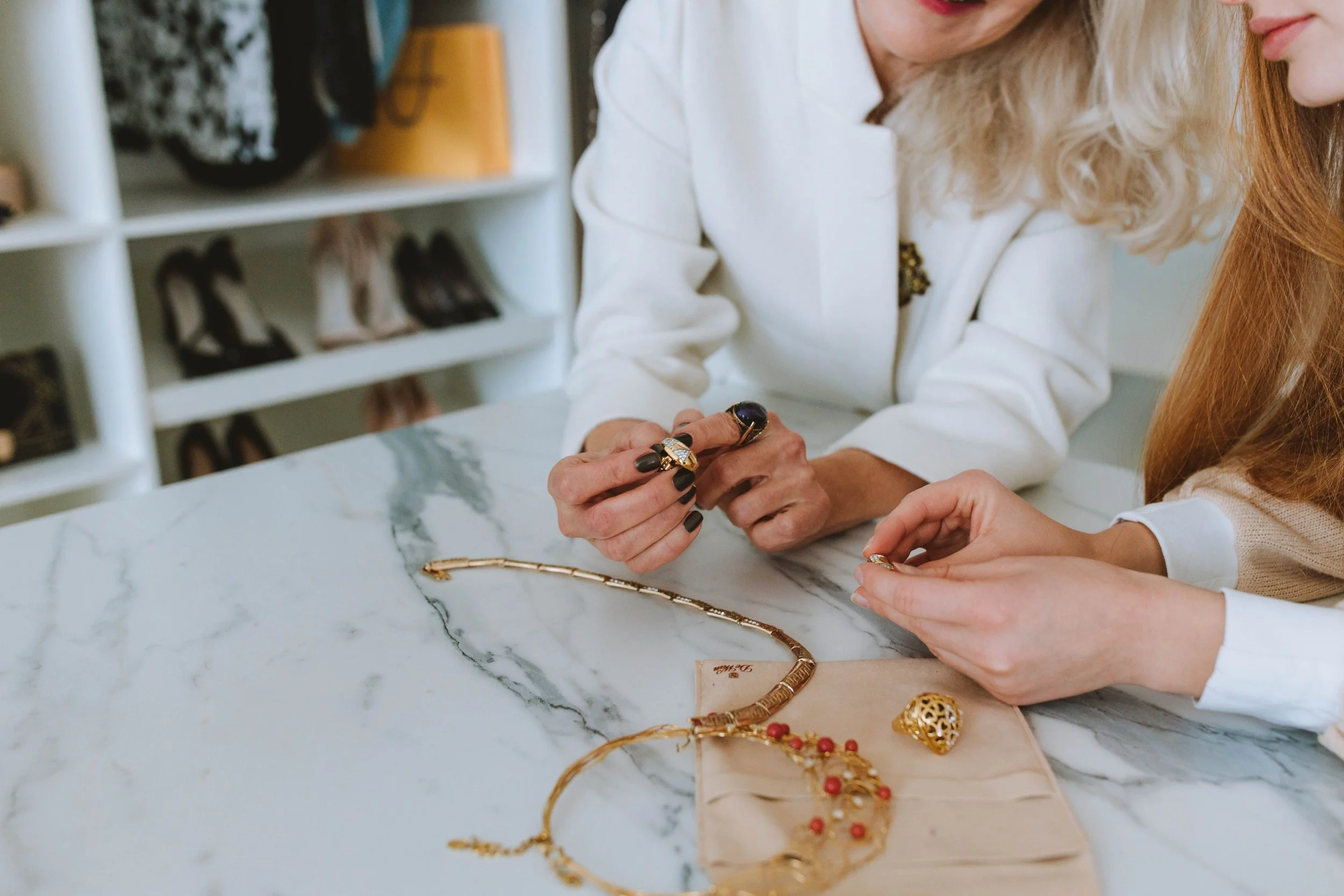
Consider a woman who spends a considerable sum on a beautiful ring. It has a tall, elegant setting and a stone that catches the light. Within a month, it lives in a drawer. The ring is not at fault. It snags on her jumper, it catches on her hair, and it gets in the way when she types.
Her story points to an idea that often surprises people. The best question a jewellery designer can ask is not about style. It is about daily life. How you wear a piece, and when, usually decides whether you love it five years from now. A beautiful design that does not suit your life is simply a very expensive ornament.
Wearability Is the Quiet Test
Style is easy to talk about, because we can point to pictures. Wearability is harder, because it only shows up in use. Does the piece sit comfortably? Does it catch on clothes? Can it survive a normal day, or does it need a special occasion?
These questions matter most for jewellery you plan to wear often, such as an engagement ring. A design that looks wonderful on a display tray may behave quite differently on a busy hand.
Tell the Designer About Your Week
A useful way to prepare is to describe an ordinary week. Do you type all day? Exercise with your hands? Cook? Carry a bag on your forearm? Each of these affects which designs will survive.
This is also the reason why a designer may ask you what seems like an odd list of questions. They are not being nosy. They are collecting the facts that turn a pretty sketch into a piece that fits.
Setting, Metal and Stone Choices
Several design choices bear on how a piece behaves. A tall setting shows off a stone but may catch more easily. A lower setting is more secure for active hands. Different metals wear differently and suit different tastes. The hardness and nature of a gemstone affect how well it deals with knocks.
A good designer will explain the trade-offs rather than simply selling the most dramatic option. Ask what each choice gives you, and what it costs in everyday use.
A Short Checklist
Before meeting a designer, it helps to settle a few things.
When and where will I wear this piece, and how often?
What do I not want, such as anything that snags or feels heavy?
Is there a sentimental object or stone I would like to include?
What is my budget, and how flexible is it?
How will I look after the piece, and who repairs it if needed?
Ask About Stones and Paperwork
If a gemstone is part of the piece, ask where it comes from and what documentation comes with it. Some designers can show reports that describe a stone's characteristics, and some can tell you about its origin. Where they cannot, a good one will say so plainly.
Treat words like finest or rare with some care, unless they are backed by specific information you can check.
Aftercare Is Part of the Design
Jewellery is worn, knocked and cleaned. Ask what warranty applies, what is covered, and what repairs will cost after it ends. Ask whether cleaning is offered. A designer who has thought about the life of a piece after you collect it has probably thought about its design too.
The woman with the ring eventually had it reset lower, and she wears it every day. The lesson is not that tall settings are wrong. It is that the right piece is the one that stays on your hand, and a good designer begins by asking where your hand has been.