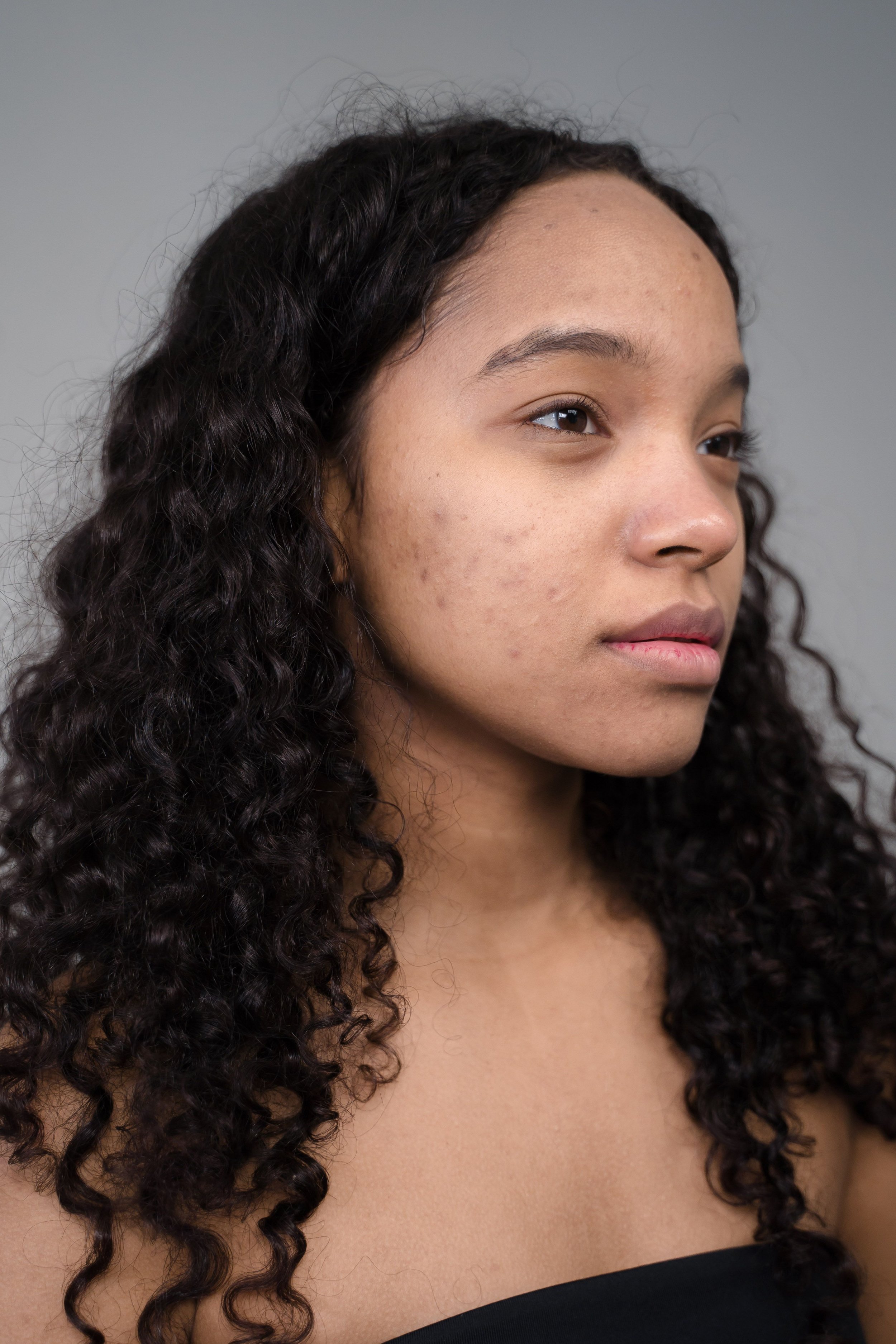
Acne marks usually involve a flat change in skin color after a breakout. Acne scars involve a change in the skin's structure, such as a depression or raised tissue. They can occur together, but fading a dark mark and improving an indented scar are different treatment goals.
That distinction matters before buying another serum or booking a procedure. The question is not simply which treatment is popular. It is what remains after the breakout, and which approach is appropriate for that particular concern.
How Are Acne Marks Different From Scars?
A flat brown or grayish spot may represent post-inflammatory hyperpigmentation, while redness can also remain after acne. These color changes do not automatically mean the skin has developed a structural scar.
By contrast, a scar changes the surface contour. It may look like a narrow pit, a wider depression, a wavy area, or a raised patch. The American Academy of Dermatology explains that flat discoloration after acne is usually not a scar and may fade with time.
Someone can have both pigment changes and textural scars in the same area. Rather than trying to identify every mark yourself, describe what you notice and ask a qualified clinician to assess it. This helps avoid expecting a product aimed at discoloration to correct a deeper indentation.
Why Does the Type of Acne Scar Matter?
Depressed acne scars are often described as ice pick, boxcar, or rolling scars. Ice pick scars are narrow and deep. Boxcar scars form wider depressions, while rolling scars can create a wavy appearance. Raised scars need a different assessment from sunken ones.
These labels help organize treatment decisions, but they are not a shopping guide. Two scars with similar names may differ in depth or in how the tissue beneath them behaves.
The useful question at a consultation is: “Which features of my scars determine your recommendation?” A clear answer should explain the relationship between the scar pattern and the proposed procedure.
Should Active Breakouts Be Treated First?
Ongoing acne can create new marks and scars while older areas are being treated. For that reason, scar treatment planning often begins with bringing active breakouts under control.
Tell the clinician about your current skincare, prescriptions, and previous acne treatments, including when you used them. Certain medications can affect the timing or suitability of a procedure. Do not discontinue prescribed treatment without speaking to the prescribing clinician.
If you have persistent painful breakouts or new scarring, seek medical assessment rather than repeatedly switching cosmetic products. A plan for preventing further damage is as important as a plan for improving existing scars.
Which Treatments May Improve Acne Scars?
Mayo Clinic notes that no single treatment is best for everyone. Options can include microneedling, laser resurfacing, chemical peels, fillers, and procedures directed at individual scars. Selection depends on the scar, skin type, and severity.
Some procedures aim to improve texture through skin remodeling. Others address a specific structural issue. For example, subcision releases fibers beneath selected scars, while punch excision removes an individual scar. Raised scars may require approaches such as injections rather than the same plan used for depressed scars.
A combination may be appropriate, but ask what each step contributes. Several procedures listed together do not, by themselves, explain why that combination suits your skin.
What Should a Useful Consultation Include?
A useful assessment separates your concerns into discoloration, texture, active acne, and any raised or tethered areas. It should also consider previous treatment, skin tone, healing history, and the time you can set aside for recovery.
For readers considering treatment in the South Bay, Skin Works' approach to acne scar treatment describes scar-specific planning and options to discuss at a consultation in Torrance. The page distinguishes structural scars from post-acne pigment changes rather than presenting one procedure as the answer to every concern.
Bring a short checklist:
Am I primarily dealing with discoloration, scars, or both?
Which scar patterns are present, and why does that affect the plan?
Do active breakouts or previous medications change the timing?
What improvement is realistic, and what is unlikely to change?
What are the risks for my skin, including unwanted pigment changes?
How will we assess progress before adding more treatment?
Does Skin Tone Affect Treatment Selection?
Skin tone and a history of pigmentation changes matter when choosing a procedure. Some resurfacing treatments carry a greater risk of unwanted color changes in darker skin, and a history of raised scars is also relevant.
Ask about the proposed technology and settings rather than relying on a broad claim that a treatment works for everyone. Discuss your own history of dark marks, slow healing, or raised scars and how it changes the recommendation.
The goal is to understand both the potential improvement and the possibility of creating another concern while treating the first.
How Much Recovery and Follow-Up Should You Expect?
Recovery varies by procedure. Request written instructions about cleansing, moisturizers, makeup, sun protection, and when to resume your usual skincare. Follow the plan for your treatment rather than advice meant for a different procedure.
The American Academy of Dermatology emphasizes gentle aftercare and sun protection after scar treatment. Treated skin may be sensitive, and sun exposure can darken it. Your clinician should explain the precautions relevant to you.
Ask when results should be assessed and whether additional sessions are likely. Improvement can take time; an early photograph may capture swelling or redness rather than the eventual change. Discuss the likely total cost, including follow-up, before committing to a package.
What Is a Realistic Treatment Goal?
A realistic goal is improvement in a defined concern, not a promise of flawless skin. Decide whether you most want to address color, scar depth, or overall texture, and ask how that goal will be evaluated.
Keep a record of treatments and photographs if your clinician recommends it. Consistent lighting and angles make comparisons more useful than changing filters or relying on memory.
Understanding what you are treating gives you a better basis for deciding whether a procedure is worthwhile, whether to wait, and when to reassess the plan.
This article provides general education and does not replace an individual medical evaluation.
Medical Sources
American Academy of Dermatology: Acne scars — signs and symptoms, consultation and treatment, and aftercare.
Mayo Clinic: Acne scars — what's the best treatment?