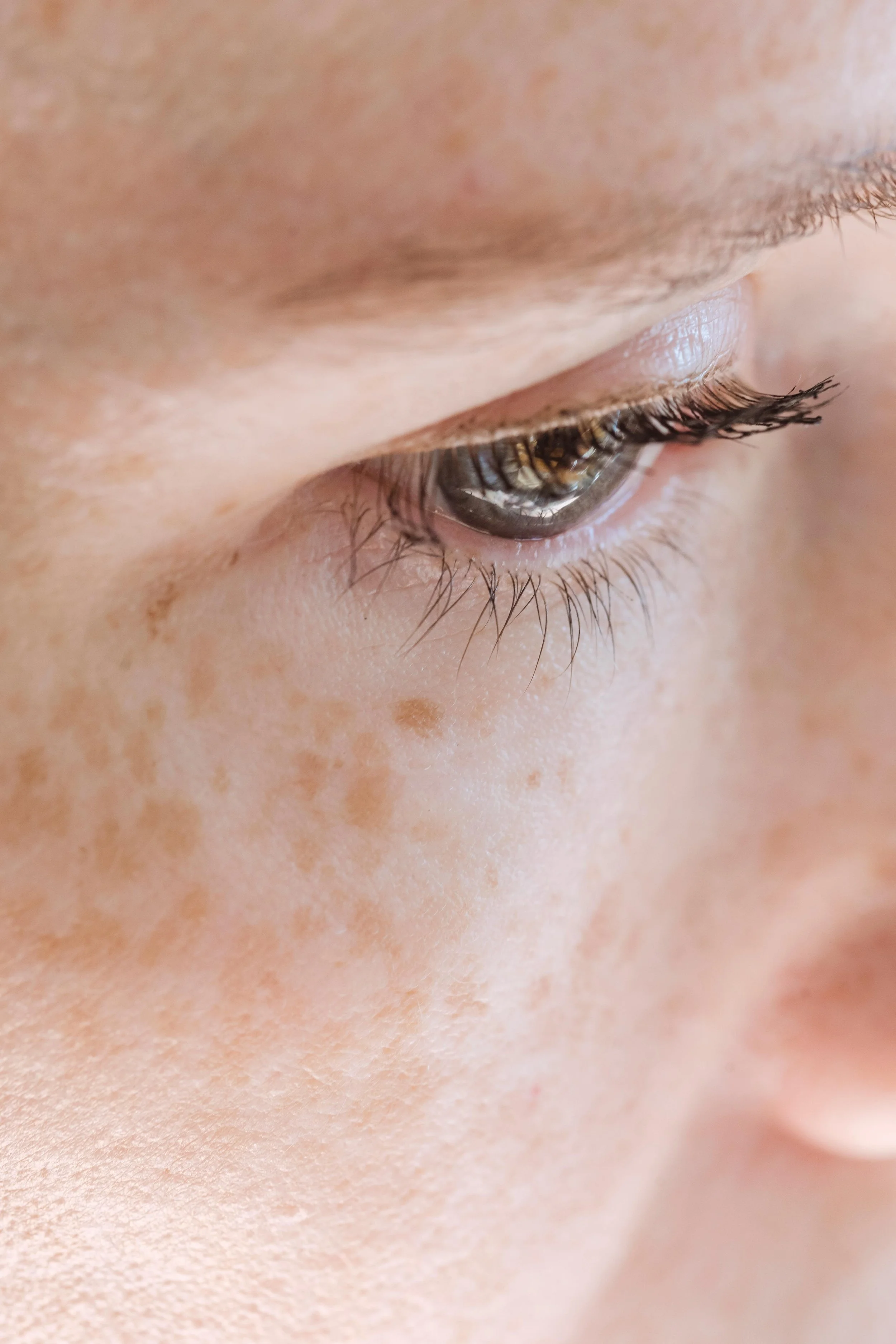
Pigmentation concerns are among the most frequent reasons adults seek dermatologic consultation, particularly as they move into their 30s and beyond. What often begins as mild uneven tone or a few dark spots can gradually evolve into persistent discoloration that feels resistant to routine skincare. Medically, this matters because pigmentation is not a single condition. It is a visible outcome of multiple biological processes, including melanocyte activity, inflammation, vascular changes, and cumulative environmental exposure.
As skin ages, its ability to regulate pigment becomes less stable. Melanocyte numbers decline by roughly 8 to 10 percent per decade after age 30, yet the remaining cells often become hyperreactive. At the same time, epidermal turnover slows, oxidative stress increases, and collagen support diminishes. These changes mean that pigment not only appears more easily, but also resolves more slowly. Identifying the underlying cause is therefore essential before any meaningful or safe treatment plan is considered.
Why Determining the Cause of Pigmentation Is Clinically Important
From a clinical perspective, pigmentation is a symptom rather than a diagnosis. Two patients with similar looking dark patches may have entirely different underlying mechanisms. One may have epidermal melasma driven by ultraviolet exposure and hormones, while another may have dermal pigmentation related to chronic inflammation or prior procedures.
This distinction matters because treatment response varies significantly. Epidermal pigment often responds to topical therapy and superficial procedures. Dermal pigment, by contrast, is slower to treat and more prone to rebound. Without identifying the underlying driver, treatment may be ineffective or, in some cases, worsen discoloration.
Patients exploring options at what is often described as the best pigmentation treatment in Singapore are increasingly seeking clarity rather than quick fixes. Accurate diagnosis helps set realistic expectations and reduces the risk of unnecessary or overly aggressive interventions.
Screening, Prevention, and Early Detection in Clinical Practice
The first step in identifying the cause of pigmentation is structured clinical assessment. Dermatology clinics typically begin with a detailed history, including onset, progression, triggers, and prior treatments. Hormonal history, medication use, pregnancy, sun exposure, and occupational heat exposure are all relevant.
Physical examination focuses on:
Distribution and symmetry of pigment
Color variation, such as brown, gray, or blue tones
Border definition and pattern
Presence of erythema or textural change
Diagnostic tools may include dermoscopy, which allows visualization of pigment networks and vascular structures, and Wood lamp examination to estimate pigment depth. Epidermal pigment typically appears more enhanced under Wood lamp, whereas dermal pigment does not.
Early detection plays a preventive role. Studies indicate that melasma treated within the first year of onset responds approximately 30 percent better than long-standing disease. Similarly, early identification of post inflammatory hyperpigmentation allows intervention before pigment migrates deeper into the dermis.
The Role of Daily Care and Lifestyle Factors
Lifestyle factors strongly influence both the development and persistence of pigmentation. Ultraviolet radiation remains the most significant trigger. Even low level, non-burning exposure can activate melanocytes through DNA damage and inflammatory signaling pathways.
Clinical studies show that consistent daily use of broad spectrum sunscreen can reduce new hyperpigmentation by 50 to 70 percent over one year. Visible light and infrared radiation may also contribute, particularly in melasma, which explains why tinted physical sunscreens are often recommended.
Other lifestyle factors that clinics consider include:
Heat exposure from cooking, exercise, or saunas
Mechanical friction from scrubbing or exfoliating
Delayed treatment of acne, eczema, or rashes
Chronic stress and sleep deprivation, which increase inflammatory mediators
Daily skincare routines are evaluated for barrier disruption. Irritation increases cytokine release, which in turn stimulates melanocyte activity. While daily care alone rarely resolves established pigmentation, it significantly influences treatment success and recurrence rates.
Age-Related and Chronic Conditions Linked to Pigmentation
Several chronic and age-related skin conditions are closely linked to pigmentation disorders.
Melasma is a hormonally influenced condition affecting up to 40 percent of women in Southeast Asia. It is characterized by symmetric brown or gray-brown patches and often worsens with age due to cumulative sun exposure and vascular changes.
Post inflammatory hyperpigmentation follows acne, burns, or dermatitis. In darker skin types, increased melanocyte responsiveness makes this pigment more persistent.
Solar lentigines, commonly called age spots, result from long-term ultraviolet damage and DNA mutations within melanocytes. Their prevalence increases significantly after age 50.
Photoaging exacerbates all of these conditions by reducing collagen support, increasing oxidative stress, and impairing epidermal renewal. These factors make pigment appear darker and more irregular over time.
Prescription Versus Over-the-Counter Treatments
Once the cause of pigmentation is identified, treatment selection becomes more precise.
Over-the-counter products typically contain ingredients such as niacinamide, vitamin C, kojic acid, and alpha hydroxy acids. When used consistently, these agents may improve mild epidermal pigmentation by approximately 10 to 20 percent over three to six months. Their primary role is maintenance rather than correction.
Prescription treatments provide more targeted biological effects. Examples include:
Hydroquinone 4 percent, which inhibits tyrosinase and may reduce melasma severity by 30 to 50 percent within 8 to 12 weeks
Topical retinoids, which increase epidermal turnover and enhance pigment dispersion, leading to gradual improvement over 12 to 24 weeks
Azelaic acid 15 to 20 percent, which suppresses abnormal melanocyte activity and is often used in sensitive or acne-prone skin
These agents require monitoring. Irritation, rebound hyperpigmentation, and ochronosis are recognized risks when prescriptions are misused or overused. As a result, they are typically used in cycles rather than continuously.
In-Clinic Procedures and Diagnostic Guidance
When topical therapy is insufficient, in-clinic procedures may be considered. Importantly, procedures are not only therapeutic but also diagnostic. Skin response to test treatments can further clarify pigment depth and behavior.
Common procedures include:
Chemical peels, which remove superficial pigment and stimulate epidermal renewal. Serial superficial peels may improve epidermal hyperpigmentation by 20 to 40 percent.
Laser and light-based devices, such as Q-switched and picosecond lasers, target melanin directly. These fragment pigment particles, which are then cleared by macrophages. Improvement rates range from 40 to 70 percent for solar lentigines and selected melasma cases after multiple sessions.
Radiofrequency microneedling may be used for dermal pigment by improving collagen structure and vascular regulation.
Because post inflammatory hyperpigmentation is a known risk, especially in Asian skin types, conservative protocols and staged treatments are standard.
What Our Dermatologist Says
In my clinical experience, pigmentation disorders are rarely solved by a single treatment. Patients often arrive expecting a definitive procedure, but pigment biology does not behave that way.
I focus first on identifying triggers and stabilizing the skin environment. Once inflammation and sun exposure are controlled, treatments become more predictable. The most successful outcomes usually come from combining accurate diagnosis with consistent, measured intervention rather than aggressive correction.
Putting This Into Practice
Track when pigmentation first appeared
Use broad spectrum sunscreen daily
Minimize heat and friction exposure
Treat acne and rashes promptly
Avoid frequent product switching
Follow prescribed treatment cycles
Reassess pigment every few months
When to Seek Professional Help
Pigmentation that changes in size, color, or pattern
Discoloration persisting longer than six months
Melasma worsening despite sun protection
History of skin cancer or atypical moles
Emotional distress related to appearance
Commonly Asked Questions
Can clinics always identify the exact cause of pigmentation?
Often yes, though some cases involve overlapping mechanisms that require observation over time.
Why does pigment return after treatment?
Triggers such as sun exposure, heat, or hormones may reactivate melanocytes even after successful treatment.
Is biopsy ever needed for pigmentation?
Occasionally, when the diagnosis is unclear or malignancy needs to be excluded.
Are procedures safe for darker skin tones?
They can be, but settings must be adjusted and risks discussed carefully.
How long does it take to see improvement?
Most treatment pathways extend over 12 to 24 weeks, with maintenance ongoing.
Next Steps
Identifying the underlying cause of pigmentation is the foundation of safe and effective management. A structured assessment allows treatment to be tailored to pigment depth, triggers, and skin biology. If you are experiencing persistent or worsening discoloration, consultation with a dermatologist in Singapore can help clarify the diagnosis and guide evidence-based care over the long term.