The stuff you touch every single day
The most meaningful gifts rarely announce themselves with fireworks. They slip quietly into a person’s routine and stay there. A wallet pulled from a pocket dozens of times a day, a watch strap fastened every morning before work, a phone case picked up from the nightstand before the first cup of coffee — these objects become part of the rhythm of living.
That is why the real value of a gift is not measured by the moment it is unwrapped. It is measured by the hundreds of ordinary moments that follow. We do not simply own these items; we interact with them constantly.
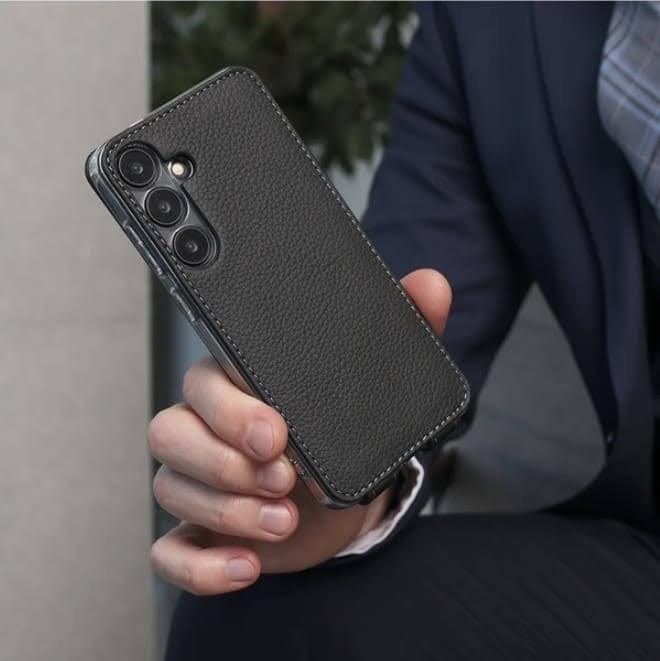
Leather that doesn’t quit—it just gets better.
Quality leather has a remarkable relationship with time. Full-grain leather, in particular, does not remain frozen in its original state. It softens where it is handled most often, deepens in color with exposure to light and air, and develops a patina that reflects years of use.
Synthetic materials often tell a different story. They tend to crack, peel, or lose their structure after repeated wear. Good leather, by contrast, becomes more individual with age.
The quiet luxury of not needing to replace
Modern consumer culture encourages constant replacement. New colors, new collections, and new trends appear every few months, creating the feeling that even perfectly functional items are somehow outdated.
A well-made leather accessory offers a different kind of luxury — the luxury of not having to think about replacing it. A carefully stitched wallet or watch strap can remain attractive for many years, outlasting multiple fashion cycles. The same applies to phone accessories. A handcrafted phone case from Marcel Robert, made from full-grain vegetable-tanned leather, is designed to outlast the phone itself, turning a highly technical object into something that acquires character over time instead of simply wearing out.
From morning coffee to late-night desk: Where these items actually live
The best gifts are rarely stored in drawers for special occasions. They earn their place through constant use.
Think about the phone case that has survived being dropped on pavement outside a train station, the watch band that has endured summer heat, workouts, and long flights, or the wallet that has spent three years in the same back pocket without losing its shape. These objects are present during commutes, meetings, grocery runs, and late-night work sessions.
Because they are woven into everyday life, they accumulate stories. A scuff on a leather corner may remind someone of a trip abroad. A softened watch strap may recall years of daily wear through changing jobs, homes, or relationships. Their value grows through participation in real life rather than through rarity.
Why "personal" doesn’t have to mean "personalized"
Personalized gifts often focus on engraving initials, printing names, or adding decorative customization. Yet intimacy can come from something much subtler: paying attention.
Notice the cracked phone case someone keeps using because they have not had time to replace it. Notice the watch strap that has become frayed at the edges or the wallet whose stitching is beginning to fail. Choosing a higher-quality version of something a person already relies on can feel far more thoughtful than selecting an extravagant object they would never have chosen for themselves.
One item, one decade—the math of long-term gifting
The financial comparison is straightforward: the supposedly “cheaper” option ends up costing far more over time. But the more interesting calculation is emotional. Ten disposable gifts create ten short-lived moments of excitement. One durable object creates a continuous presence.
A watch strap that is still fastened every morning eight years later carries a different kind of memory. It becomes associated not only with the day it was given but also with countless ordinary mornings afterward.
That is the quiet power of long-term gifting. The best presents are not the ones that create the loudest reaction when opened. They are the ones that remain useful, beautiful, and familiar years later—objects that stop feeling like gifts and start feeling like part of a life.