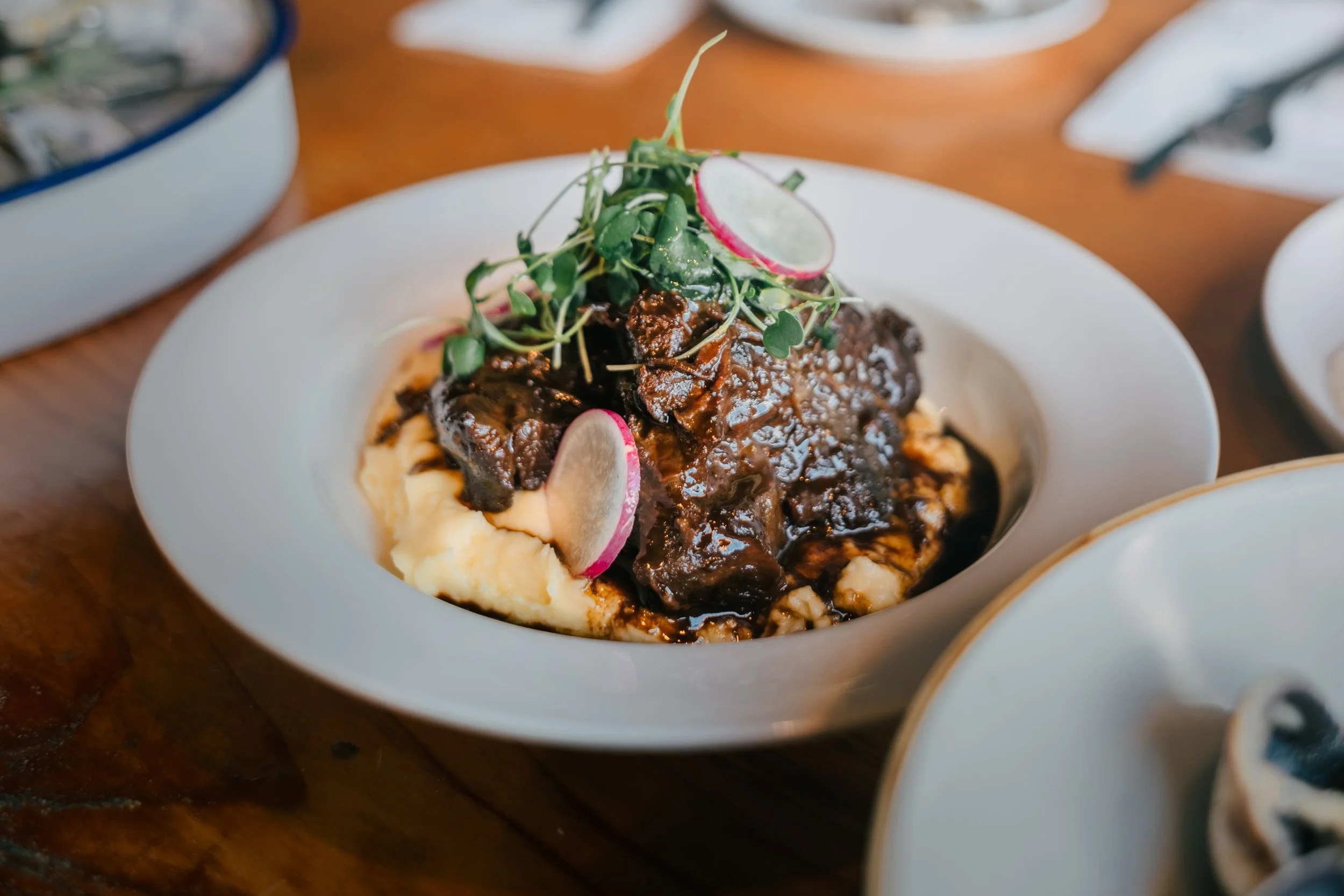
One of the best reasons people enjoy braising so much is that it does not ask for much while it is cooking.
The reality is that, as with many cooking techniques, a few small things can make a surprisingly big difference to the final result.
The kind of things that seem confusing the first time they happen and are completely obvious once you have seen them a few times.
Below are five braising secrets every home cook should know:
Tough Does Not Mean Overcooked
The meat looks ready.
The sauce looks perfect.
Everything about the dish says dinner should be on the table. Then, you cut into the meat, and it is still tough as old boots. It catches a lot of people out because braising does not work in a straight line.
There is almost always a point where the meat looks finished but isn’t. If it is still making you chew harder than you expected, the answer is usually more time.
2. The Pot Matters More Than People Think
People spend a lot of time choosing ingredients for a 4th of July party. After all, it isn’t just the traditional burgers and hotdogs.
Very few spend the same amount of time thinking about the pot.
A heavy Dutch oven behaves very differently from a thin pot with a loose-fitting lid. One seems happy to sit in the oven for four hours, the other feels like it is fighting you the whole time.
Most home cooks only realize this once they have experienced it.
3. Where The Flavor Builds
People often think the braising part is where all the flavor magically comes from.
It isn’t.
A lot of it is already in the pot before the meat even goes into the oven.
Take techniques for red wine-braised short ribs, for example.
The ribs are browned first. Onions, celery, and carrots are cooked down, and tomato paste gets added to the pot. Then, red wine is added before the stock.
None of those steps is difficult, but they are the steps people often rush through. Everyone wants to get the lid on and let the braising begin.
The thing is, braising only works with what is already in the pot. If the foundation is rushed, no amount of cooking time is going to put that flavor back.
4. It Shouldn’t Look Too Busy
A lot of people expect a braise to look like it is working hard.
The liquid is bubbling away. Steam is pouring out. Everything appears to be happening.
That is usually not a good sign.
A braise should be surprisingly calm. A few lazy bubbles here and there are often all you need.
If the pot looks like it is in a hurry, there is a good chance the heat is higher than it needs to be.
5. The Leftovers Are The Best
Most people discover this one accidentally.
Dinner is good. The leftovers are better.
The sauce tastes richer and more robust. Every recipe seems to come together a little more. The flavors feel less separate and more connected.
That’s one of the reasons why so many people make braises a day ahead when they have the chance. Some dishes are at their best straight from the stove – a braise isn’t usually one of them.
To End
Now that you understand how braises behave, where the real flavor develops, and what common mistakes look like, you can turn your next good braise into a great one!