Remote coaching has reshaped how trainers operate, and the platform sitting behind that work matters more than most people realize. Online fitness platforms for personal trainers now span everything from creator marketplaces with live streaming to full practice-management suites, and choosing the wrong one costs you time and clients. This list covers five strong options in 2026, ordered by overall fit for independent trainers who want to build and monetize an audience without being locked to a single gym.
The right platform makes remote coaching work at scale
Scaling a one-on-one coaching business depends on infrastructure you probably won't build yourself. A solid platform handles scheduling, payment collection, content delivery, and client communication, so your time goes toward actual coaching, not admin headaches. The five platforms below represent different philosophies on how to do that; some center on live interaction, others on program delivery, and at least one sits closer to a fitness creator economy than a traditional coaching tool.
The truth is, no single platform wins across every use case. What matters is matching the tool to how you actually work.
1. Perspire TV
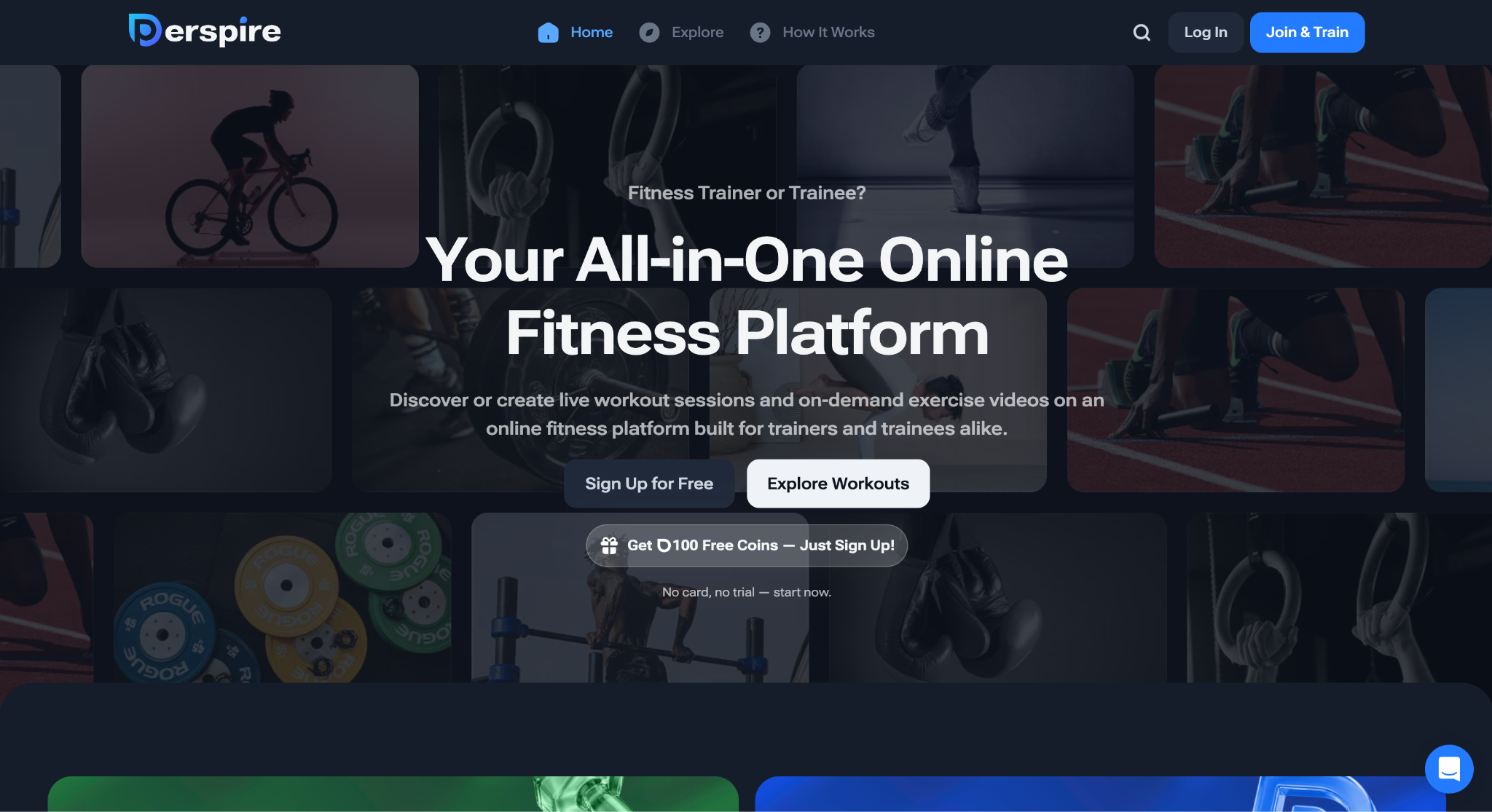
What it does: Perspire TV is a two-sided fitness streaming marketplace where independent trainers host live classes and upload on-demand videos across disciplines including HIIT, yoga, strength, boxing, dance, and Pilates. Trainees pay through a coin-based virtual currency, and trainers keep 80% of every Coin spent on their content.
Who it fits: Trainers who already have - or want to build - an audience and prefer live interaction over asynchronous program delivery. It's well-suited for instructors in high-energy disciplines where real-time energy matters, and for coaches who want pricing control without negotiating platform terms.
Standout features: The live-to-on-demand pipeline is built in; every live session gets automatically saved for later rental. Coins never expire, new trainees receive 100 welcome Coins on sign-up (no credit card required), and monthly Coin subscriptions come with a 10% bonus. Trainer payouts run through Stripe. What sets it apart is the creator-economy model: operating as an online fitness coaching platform that lets trainers set their own prices and earn a consistent 80% revenue share, rather than collecting a flat fee regardless of output. Trainer sign-up is free, and the platform works globally across devices.
2. Everfit
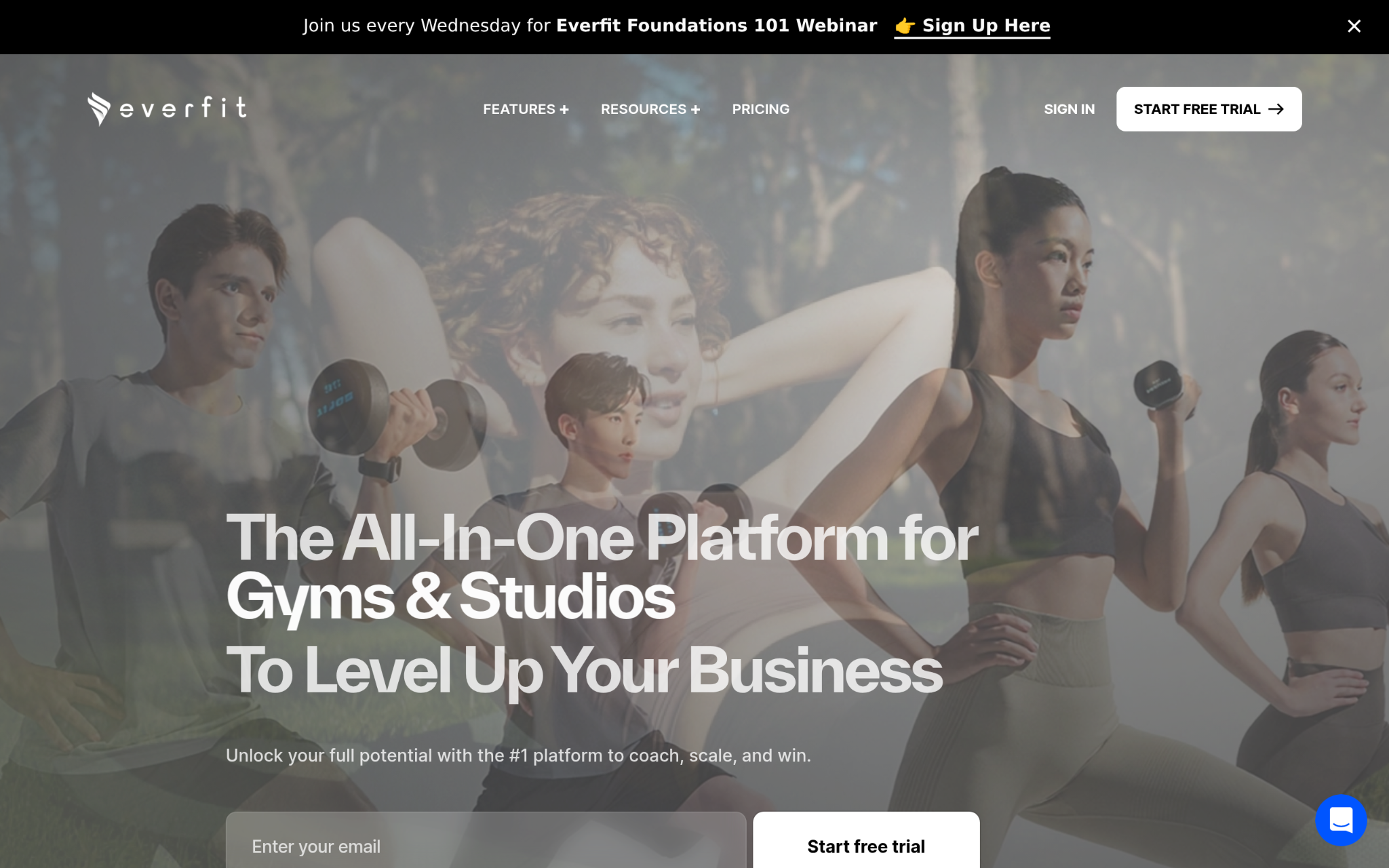
What it does: Everfit is an all-in-one personal training platform covering program creation, nutrition tracking, habit coaching, client communication, and payments. It also offers white-label branding so coaches can present the experience entirely under their own name.
Who it fits: Individual trainers, gym studios, and fitness communities that want a single tool for structured program delivery and client management. Its breadth makes it a reasonable fit for coaches juggling large client rosters across multiple service types.
Standout features: The AI Workout Builder speeds up program creation significantly. Everfit's library includes over 1,500 exercise videos, with the option to upload custom content. Built-in billing lets trainers create packages and subscriptions and process payments directly through the platform. Founded in San Francisco in 2019, the company now reports over 200,000 fitness coaches in 190-plus countries, a scale that speaks to its stability as a business infrastructure choice.
3. Lenus
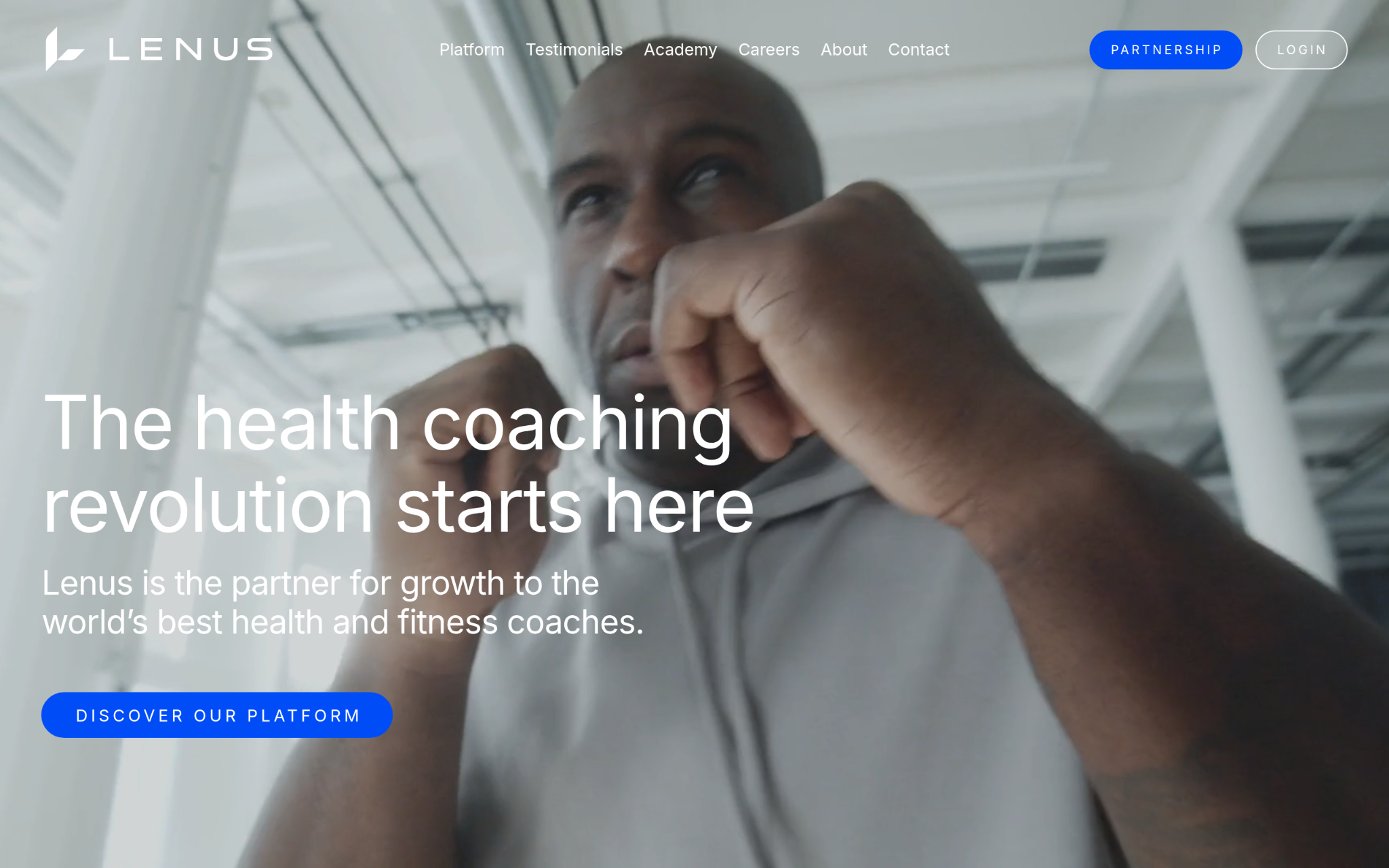
What it does: Lenus is a health technology company offering a platform for fitness and nutrition coaches to manage clients, build personalized meal and exercise plans, track progress, and communicate with their client base. It also runs Lenus Academy, a certified education program for online coaches.
Who it fits: Coaches who want to run a practice with a more formal educational and business development layer. Its global footprint - offices in the US, UK, Germany, Scandinavia, and beyond - makes it a reasonable option for coaches building international clienteles.
Standout features: Client satisfaction data backed by EPSI Rating shows coaches on the platform average a 9.1 out of 10 rating for coaching experience. Lenus was founded in 2016 by Bertram Thorslund in Copenhagen and reached over €26 million in revenue in 2022, with the United States becoming its largest market. A team of approximately 400 employees supports the platform. The Lenus Academy adds a professional development angle that most competing platforms don't offer, and honestly, that's a bigger differentiator than it might first appear.
4. TrueCoach
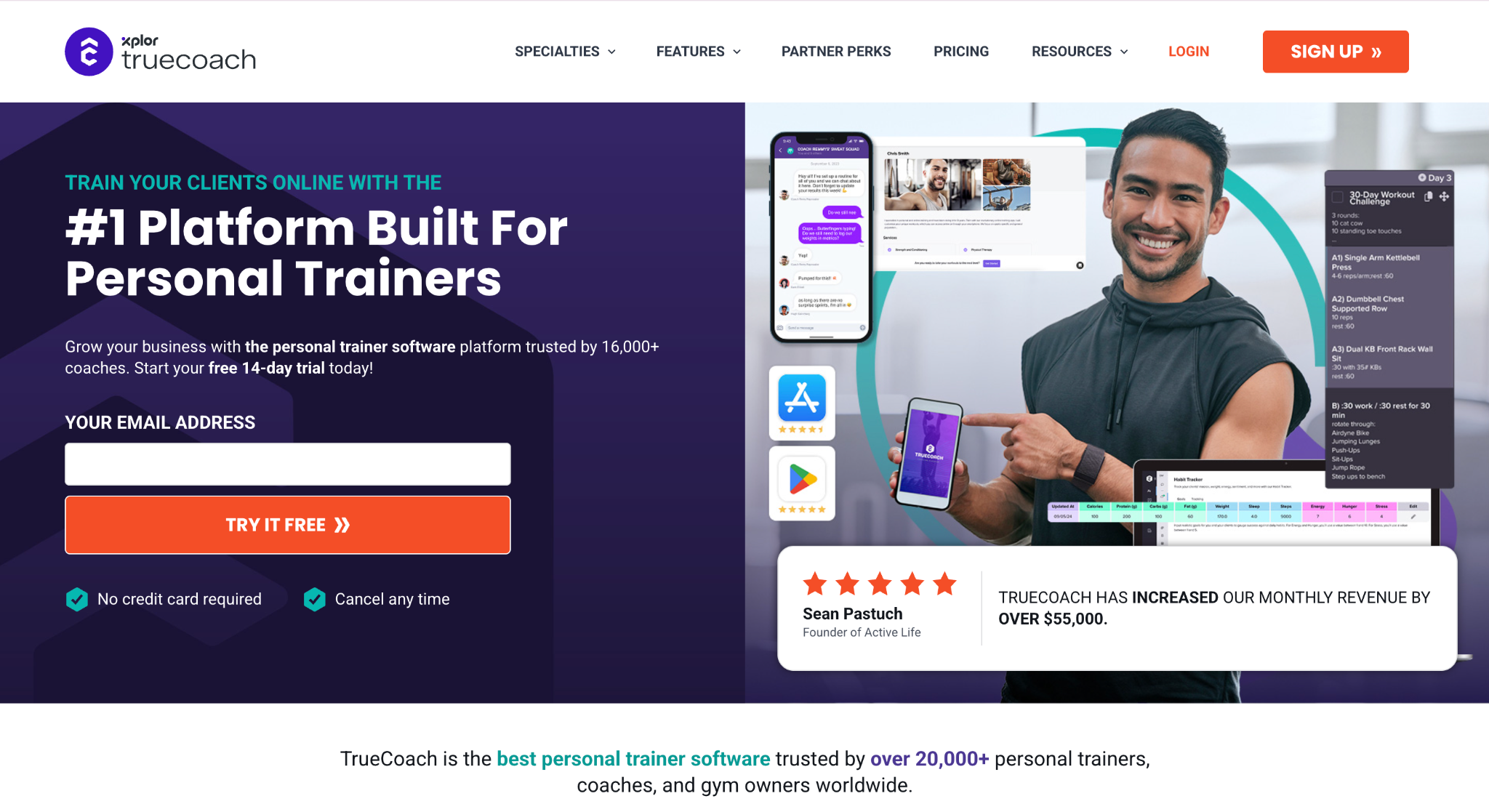
What it does: TrueCoach is a coaching platform designed to bring client management, program building, payments, nutrition tracking, and compliance tracking into one place. It targets personal trainers, coaches, and gym owners who want to cut admin time and coach more clients simultaneously.
Who it fits: Trainers who prioritize compliance tracking and structured program delivery. The founder's background as a CrossFit gym owner shows up clearly in the product's emphasis on tracking client adherence, not just pushing programs out the door.
Standout features: The platform includes MyFitnessPal integration for nutrition, wearables sync, habit tracking, and automated Stripe payments. Public profiles serve as lead-generation pages. TrueCoach is trusted by over 20,000 coaches in more than 100 countries, and pricing starts at $26.34 per month. Founded in 2015 and now part of ABC Fitness through its 2020 acquisition by Transaction Services Group, it carries the backing of a larger fitness-tech organization.
5. Trainerize
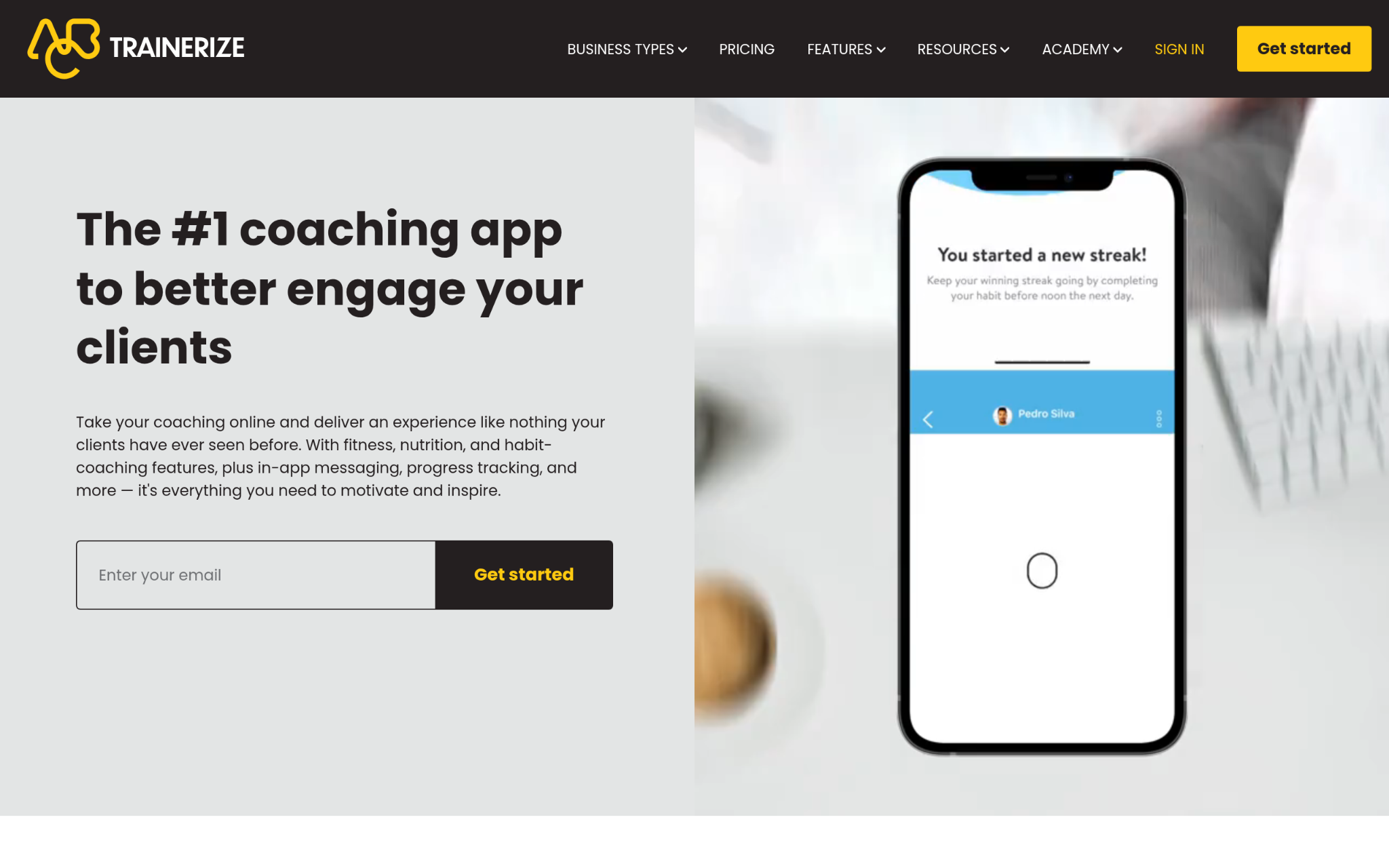
What it does: ABC Trainerize is a coaching and client engagement platform supporting online, in-person, and hybrid training models. Workout delivery, nutrition tracking, progress charts, messaging, and payment processing all live inside one app.
Who it fits: Trainers and fitness businesses running a mix of in-person and remote clients. Boutique studios and gym owners with multiple trainers on staff benefit from the platform's ability to track adherence across a bigger client base.
Standout features: Custom branding for the mobile app lets coaches present a polished, business-grade experience. MyFitnessPal integration, recurring billing, and workout templates that scale across many clients are the core tools coaches tend to rely on most. Founded in 2012 in Vancouver and acquired by ABC Fitness Solutions in 2020, Trainerize reached $20 million in annually recurring revenue in 2022. Pricing starts at $10 per month. And sitting within ABC Fitness's broader ecosystem of 1,000-plus employees means the product isn't going anywhere.
What to look for in an online fitness coaching platform
Online fitness platforms for personal trainers don't have a universal right answer; the best fit depends on your training model. But a few questions narrow it down fast.
Revenue model first. Some platforms charge trainers a flat monthly fee; others take a cut of earnings. Perspire TV's 80-20 split rewards trainers whose audiences grow, while flat-fee tools like TrueCoach and Trainerize work better for coaches with stable, predictable client numbers.
Live versus asynchronous. If real-time energy is central to what you offer - group HIIT, dance, interactive yoga - a platform built around live streaming fits far better than a program-delivery tool. If clients prefer completing workouts on their own schedule, structured program builders are the smarter call.
Client volume and admin load. Platforms with AI-assisted program builders, compliance dashboards, and automated billing (Everfit, Trainerize, TrueCoach) are designed to reduce overhead as you scale; creator-economy platforms prioritize audience monetization over client management workflows. The trick is knowing which problem you're actually trying to solve.
Branding and independence. White-label options (Everfit) and custom-branded apps (Trainerize) let coaches build equity in their own name. That matters more as the practice grows, and less at the early stage when audience-building is the priority.
Bottom Line
The strongest online fitness platforms for personal trainers share one quality: they remove friction between the trainer's knowledge and the client's access to it. Whether that friction shows up in payment collection, content delivery, scheduling, or program scaling determines which tool actually fits your situation. Trainers building live, interactive audiences have different needs than coaches managing 200 asynchronous clients on structured plans. So match the platform to your real business model - not the flashiest feature list - and you'll notice the difference almost immediately.