Gyrotonic vs Pilates is a comparison that often comes up when someone wants more than a workout that simply burns calories or leaves their muscles sore the next morning.
Both movement systems focus on control, alignment, mobility, breathing, and building a stronger relationship with how your body moves.
If you are deciding between the two, understanding gyrotonic vs pilates can help you choose an approach that better matches your mobility, strength, posture, and long-term fitness goals.
The interesting part is that the two methods can look somewhat similar from across a studio, yet feel surprisingly different once you start moving.
Pilates tends to emphasize controlled, precise movements and core stability, while the Gyrotonic method uses more circular, spiraling, and three-dimensional movement patterns.
Neither approach is automatically the right choice for everyone, because the better fit depends largely on what you want your body to become better at doing.
What Is Pilates Really Training?
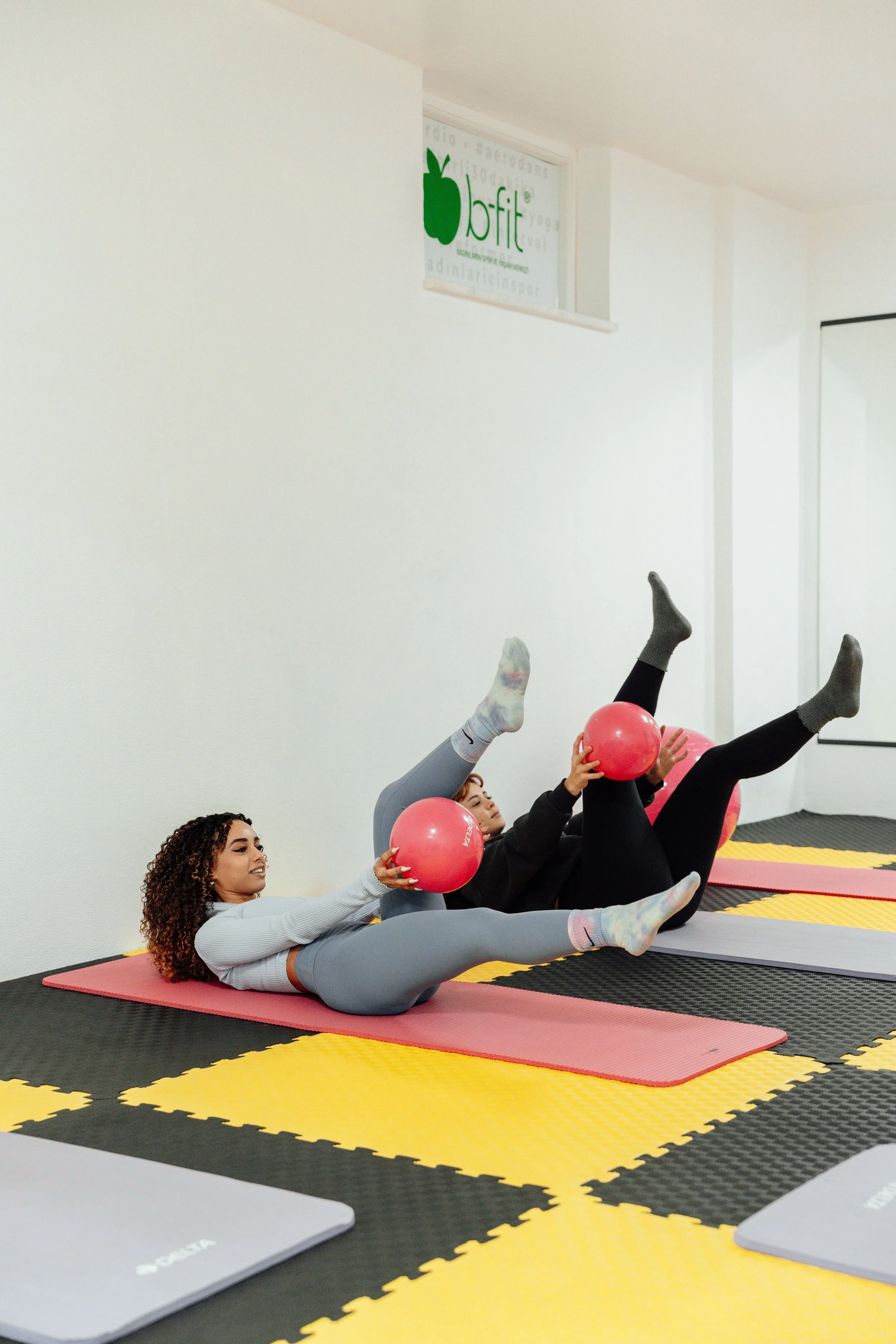
Pilates is a low-impact exercise method built around controlled movement, breathing, alignment, and core strength.
Depending on the class, exercises may be performed on a mat or with equipment such as a reformer, Cadillac, chair, or barrel.
A typical reformer session might have you pressing a moving carriage away with your legs, controlling its return, and keeping your pelvis and torso stable throughout the movement.
That sounds simple until you realize that rushing through the repetition or allowing your hips to shift changes the exercise completely.
This emphasis on precision is one reason Pilates has become popular with people who want better posture, stronger abdominal muscles, improved muscular control, and balanced strength.
It can also expose movement habits that are easy to overlook during conventional gym training.
Someone who can squat a respectable amount of weight, for example, may discover during a Pilates exercise that maintaining pelvic stability while moving one leg independently is unexpectedly difficult.
Why the Core Gets So Much Attention
Core training in Pilates involves considerably more than trying to create visible abdominal muscles.
Exercises frequently challenge the abdominals, pelvic floor, back muscles, diaphragm, and muscles surrounding the pelvis to coordinate while the arms or legs move.
That coordination can matter during ordinary activities such as lifting groceries, sitting at a desk, running, or carrying a suitcase through an airport.
Instead of treating the core as a muscle group that needs endless crunches, Pilates trains it as part of a larger stabilization system.
How the Gyrotonic Method Approaches Movement
The Gyrotonic exercise method has a noticeably different visual language.
Rather than concentrating mainly on linear or isolated movement patterns, sessions often incorporate flowing circles, spirals, arches, curls, and coordinated movements through multiple planes.
Specialized equipment uses pulleys, weighted resistance, and rotating components that allow the body to move continuously instead of repeatedly stopping and resetting.
Imagine someone who spends eight hours each day leaning toward a laptop and then goes to the gym to perform another series of mostly forward-and-back exercises.
A movement practice involving rotation, spinal articulation, and reaching through different directions may introduce ranges of motion that are largely missing from that person's day.
The objective is not simply to become more flexible.
The method combines mobility with muscular control, coordination, breathing, and resistance so that movement remains active rather than becoming passive stretching.
Why Circular Movement Matters
Human bodies rarely operate in perfectly straight lines outside the gym.
Reaching into the back seat of a car, swinging a tennis racket, turning to grab something from a kitchen counter, and walking all involve combinations of rotation and movement across several planes.
Circular and spiraling exercises encourage the spine, shoulders, hips, and surrounding musculature to coordinate through those more complex patterns.
For dancers and athletes, that can complement activities where rotation and fluid transitions are already important.
For non-athletes, it can simply provide a way to explore movement beyond the limited positions created by prolonged sitting.
Gyrotonic vs Pilates: Where the Biggest Differences Show Up
The most obvious difference becomes apparent in how each session feels.
Pilates often asks you to create stability first and then perform a carefully controlled movement without losing that organization.
The Gyrotonic method frequently asks you to maintain control while continuing through a flowing sequence involving rotation, expansion, and changes of direction.
Think about two people who both complain that their bodies feel stiff after work.
One may actually need better trunk stability and muscular endurance, while the other may feel restricted because their spine and shoulders rarely move through varied ranges.
The first person could appreciate the structured control of Pilates, while the second might enjoy the multidirectional nature of Gyrotonic training.
Those examples are not prescriptions, but they illustrate why choosing solely according to which workout looks more challenging can miss the point.
Which Is Better for Building Strength?
Both methods can improve strength, although neither needs to imitate traditional weight training to be useful.
Pilates can create substantial muscular challenge through leverage, springs, body weight, tempo, and precise positioning.
Slowly controlling a reformer carriage while maintaining alignment can make relatively modest resistance feel demanding.
Gyrotonic exercises also use resistance, but strength is frequently developed while the body travels through larger, more continuous movement patterns.
If maximizing muscle size or absolute strength is your primary objective, conventional resistance training will usually remain an important part of your program.
If your goal is improving movement quality, muscular control, core stability, and usable range of motion, either practice can complement strength training effectively.
What About Flexibility and Mobility?
Flexibility describes how much range is available, while mobility involves being able to control movement through that range.
That distinction matters when comparing these exercise systems.
Pilates develops mobility through controlled exercises that require the body to maintain alignment while joints move.
Gyrotonic training places particularly visible emphasis on spinal articulation, rotation, and expansive movement patterns.
Consider someone who can easily touch their toes but struggles to rotate comfortably through the upper back.
More hamstring stretching may not address the movement limitation they actually notice during everyday life.
A program that includes controlled thoracic rotation, coordinated breathing, shoulder movement, and spinal articulation may be more relevant to that particular goal.
Which Method Makes More Sense for Posture?
Posture is not simply a matter of pulling your shoulders backward and holding them there all day.
It depends on strength, mobility, breathing mechanics, body awareness, movement habits, and the positions you repeatedly occupy.
Pilates can help people recognize alignment and improve control around the pelvis, trunk, and shoulders.
Gyrotonic exercises may complement this by encouraging movement through the spine and rib cage rather than treating good posture as one rigid position.
For someone working at a computer from 9 a.m. to 6 p.m., however, one exercise class cannot completely cancel out hours of uninterrupted sitting.
Regular movement breaks, workstation setup, strength training, sleep, and daily activity still matter.
What Should Beginners Expect?
A beginner does not need exceptional flexibility or a strong core before starting either method.
In fact, discovering where movement feels difficult is part of the learning process.
The first few sessions may feel mentally demanding because both approaches require attention rather than mindless repetitions.
A Pilates instructor might repeatedly cue the position of your ribs or pelvis during an exercise that initially appears straightforward.
A Gyrotonic instructor may guide you through a circular pattern that feels awkward until your breathing, spine, arms, and timing begin working together.
That learning curve is normal, and good instruction matters significantly because equipment setup and movement quality can influence the experience.
Can You Combine Both?
Pilates and Gyrotonic training do not have to compete for a permanent place in your routine.
Someone might use Pilates to develop trunk control and stability while incorporating Gyrotonic sessions for rotational movement, spinal mobility, and coordination.
Either can also sit alongside walking, running, cycling, sports, or conventional resistance training.
A recreational runner, for instance, might lift weights twice per week, run three times, and use one movement-focused session to work on control and mobility.
The ideal combination depends on training history, recovery capacity, available time, and individual goals rather than a universal weekly formula.
How to Choose the Right Workout for Your Goals
Start by identifying the problem you actually want your exercise routine to solve.
If you enjoy precise exercises, structured progression, core-focused training, and clearly controlled resistance, Pilates may feel more intuitive.
If you are drawn toward flowing movement, spinal mobility, rotation, coordination, and exploring movement in several directions, the Gyrotonic method may feel more natural.
Your instructor matters almost as much as the method itself.
A knowledgeable teacher who adapts exercises to your current abilities is generally more useful than choosing a particular workout because it happens to be fashionable.
Anyone managing persistent pain, a recent injury, surgery, pregnancy-related considerations, or a diagnosed musculoskeletal condition should also discuss appropriate exercise with a qualified healthcare professional before beginning a new program.
The Bottom Line
Choosing between these two movement systems is less about finding a universal winner and more about matching the training style to what your body and fitness routine currently need.
Pilates offers a structured approach to core stability, alignment, controlled strength, and body awareness, while Gyrotonic training emphasizes fluid, multidirectional movement, spinal articulation, coordination, and active mobility.
Try an introductory session of each if you have access to qualified instructors, and pay attention to more than how tired you feel afterward.
Notice how comfortably you move, how well you understand the exercises, whether the teaching style works for you, and whether the practice supports the activities you actually want to perform outside the studio.
The most useful workout is ultimately the one that addresses your goals, fits realistically into your routine, and keeps you moving consistently enough to make progress.