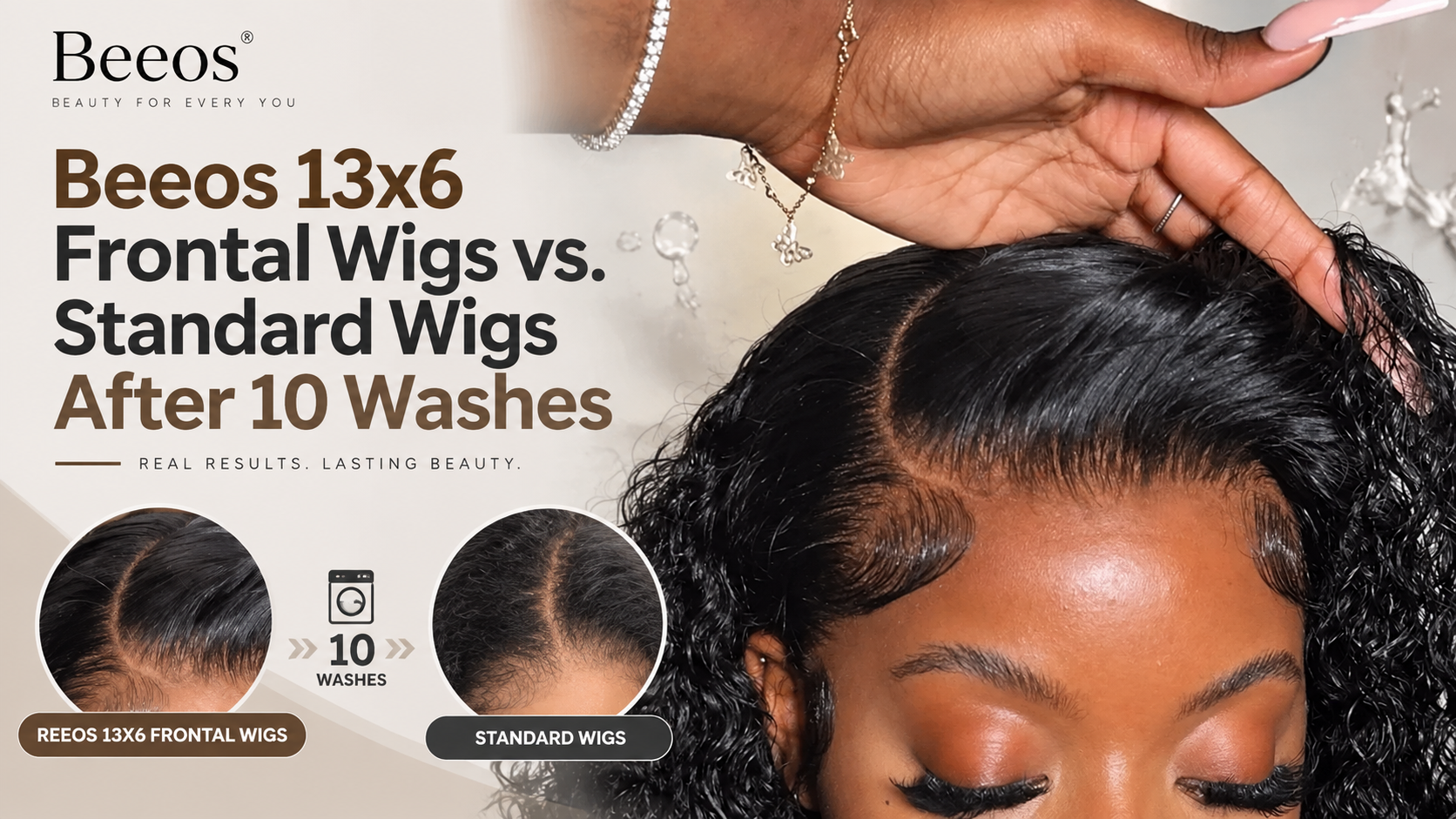
A lace frontal wig can look nearly perfect when it first comes out of the box. The hair is smooth, the lace is clean, and the hairline hasn't yet been exposed to repeated shampooing, styling products, heat, or everyday handling.
The more useful question is what happens later.
Ten washes won't necessarily tell you exactly how long a wig will last, but they can reveal a lot about its construction and how the hair responds to regular maintenance. Changes in softness, tangling, shedding, lace condition, and hairline appearance often become easier to notice after repeated wash cycles.
So, when comparing Beeos with a typical 13x6 frontal wig, what should you actually look for after wash number ten?
Why Ten Washes Is a Useful Checkpoint
There isn't a universal number of washes that determines whether a wig is good or bad.
Two people can own the same wig and get different results depending on how often they wear it, what products they use, how they detangle it, and whether they regularly apply heat.
Still, ten washes provide a useful reference point.
By then, the wig has been through enough shampooing, conditioning, drying, detangling, and restyling for some differences to become visible.
Instead of judging only by how shiny the hair looks when new, you can begin asking more practical questions:
Does the hair still feel soft?
Has shedding noticeably increased?
Does the frontal still lie flat?
Are knots becoming more visible?
Has tangling become harder to manage?
Does the hairline still look natural?
Those details are often more meaningful than first impressions.
What Makes a 13x6 Frontal Different?
Before looking at wash performance, it helps to understand the construction.
A 13x6 frontal generally provides approximately 13 inches of coverage across the front and up to 6 inches of depth toward the crown, although exact construction can vary by product.
That additional frontal area gives the wearer more styling flexibility than smaller lace areas.
Good 13x6 frontal wigs can allow deeper parting and make it easier to switch between middle and side parts without immediately exposing the wig construction.
But a larger lace area also means more lace needs to be maintained.
Repeated washing can affect the lace, knots, hairline, and attached hairs if the wig is handled too aggressively.
Washes 1–3: The Initial Finish Starts to Change
During the first few washes, one of the biggest changes may simply be the disappearance of the factory-new finish.
New human hair wigs can arrive exceptionally smooth and polished. After shampooing, the hair begins behaving more like it will during normal ownership.
This isn't necessarily deterioration.
After the first few washes, you get a better sense of the hair's actual texture. Straight hair may become slightly less sleek, while body wave or curly textures may need more deliberate conditioning and styling to restore their pattern.
At this stage, both a Beeos frontal wig and a standard alternative should be judged after proper conditioning rather than immediately after shampooing.
A wig shouldn't be expected to look freshly styled while wet.
Washes 4–6: Watch the Hairline and Shedding
The middle washes are a good time to start monitoring shedding.
Some loose strands during washing and detangling aren't automatically a sign of poor construction. The more important issue is whether shedding becomes progressively heavier.
Pay particular attention to the frontal.
The hairs around the front are visually important because they create the transition between lace and hairline. Excessive hair loss in this area can gradually reduce density or create uneven sections.
When comparing Beeos with a standard frontal, avoid relying on memory. If you're genuinely testing two wigs, collect or photograph shed hair under similar conditions after each wash.
That provides a much more meaningful comparison than simply saying one wig "seems to shed less."
Washes 7–10: Tangling Becomes More Revealing
By later wash cycles, tangling and manageability can become useful indicators of how the hair is holding up.
Longer wigs deserve particular attention because the ends experience more friction against clothing, bedding, and the wearer's back.
Check the nape as well.
This area is prone to friction and may begin tangling before the rest of the wig. If the hair repeatedly forms difficult knots shortly after conditioning and detangling, maintenance can become increasingly time-consuming.
The way you wash matters, though.
Aggressively rubbing or piling long hair on top of itself can create tangles that say more about the washing method than the wig.
For a fair comparison, both wigs should receive similar treatment.
Does the Lace Still Look Natural?
Hair quality is only half of the equation. A frontal wig also depends on its lace.
After repeated washing, inspect the lace without makeup, adhesive, or filters.
Look at the front edge and parting area.
Does the lace still lie flat? Has it stretched or changed shape? Are there tears around frequently handled sections? Are the knots more noticeable because hairs have shed from certain areas?
The condition of the lace can influence how realistic the entire wig appears even when the hair itself remains in good condition.
This is particularly important for people who prefer glueless installation or frequently remove and reinstall their wigs.
Softness Should Be Judged After Conditioning
"Soft hair" is one of the most common descriptions used when reviewing wigs, but softness is influenced heavily by maintenance.
Shampoo removes oils and product buildup. Conditioner restores slip and makes detangling easier.
If one wig receives a deep-conditioning treatment while another receives only shampoo, comparing their softness afterward tells you very little.
For a useful Beeos-versus-standard comparison, use similar products, similar water temperatures, and similar conditioning times.
After drying, evaluate how easily your fingers or a wide-tooth comb move through the hair.
Also inspect the ends. Dryness often becomes visible there before it appears near the roots.
What About Heat Styling?
Heat can complicate a ten-wash comparison.
If you're straightening, curling, or blow-drying the wig after every wash, you're testing the combined effects of washing and repeated heat exposure.
That's realistic for some users, but it should be acknowledged.
Use heat protectant and avoid unnecessarily high temperatures. Human hair doesn't become immune to damage simply because it's attached to a wig rather than growing from the scalp.
Repeated high heat can contribute to dryness and make later wash cycles appear worse.
How Beeos Should Be Compared Fairly
A useful comparison shouldn't begin with the assumption that the branded wig will win.
Beeos and a standard 13x6 frontal should be compared under similar conditions: similar hair length, texture, density, washing frequency, products, drying method, and heat exposure.
Then evaluate the same characteristics after each wash.
A simple comparison can track:
Shedding
Tangling
Hair softness
Dryness at the ends
Lace condition
Hairline density
Parting appearance
Ease of styling
This approach provides much more information than comparing two wigs straight out of their packaging.
Maintenance Can Change the Outcome
The durability of a frontal wig isn't determined entirely at the factory.
How you care for it matters.
Detangle gently before washing, particularly with longer textures. Avoid aggressively rubbing the lace or pulling a brush through knots. Use products appropriate for human hair, and give extra attention to the mid-lengths and ends when conditioning.
When the wig isn't being worn, storing it properly can also help prevent unnecessary tangling and deformation.
For lace frontals, be particularly careful during adhesive removal. Pulling the lace away before the bond has been properly loosened can damage an otherwise well-maintained wig.
So, What Should You Expect After 10 Washes?
A well-maintained human hair frontal wig won't necessarily look exactly as it did on day one—and that isn't automatically a problem.
After ten washes, the more important question is whether it remains manageable and wearable.
The hair should still respond reasonably well to conditioning and styling. The lace should remain functional, and shedding shouldn't have created major visible gaps in the frontal. The hairline and parting area should still be capable of producing a convincing finish with normal styling.
For Beeos, the same standards should apply as they would to any competing 13x6 frontal.
Brand names can help shoppers narrow down their options, but repeated wear reveals things that product photos cannot. If you're comparing wigs for yourself, pay attention to how they change over time—not just how impressive they look on the first day.
Ten washes aren't the end of a wig's story. But they can tell you considerably more than the unboxing.