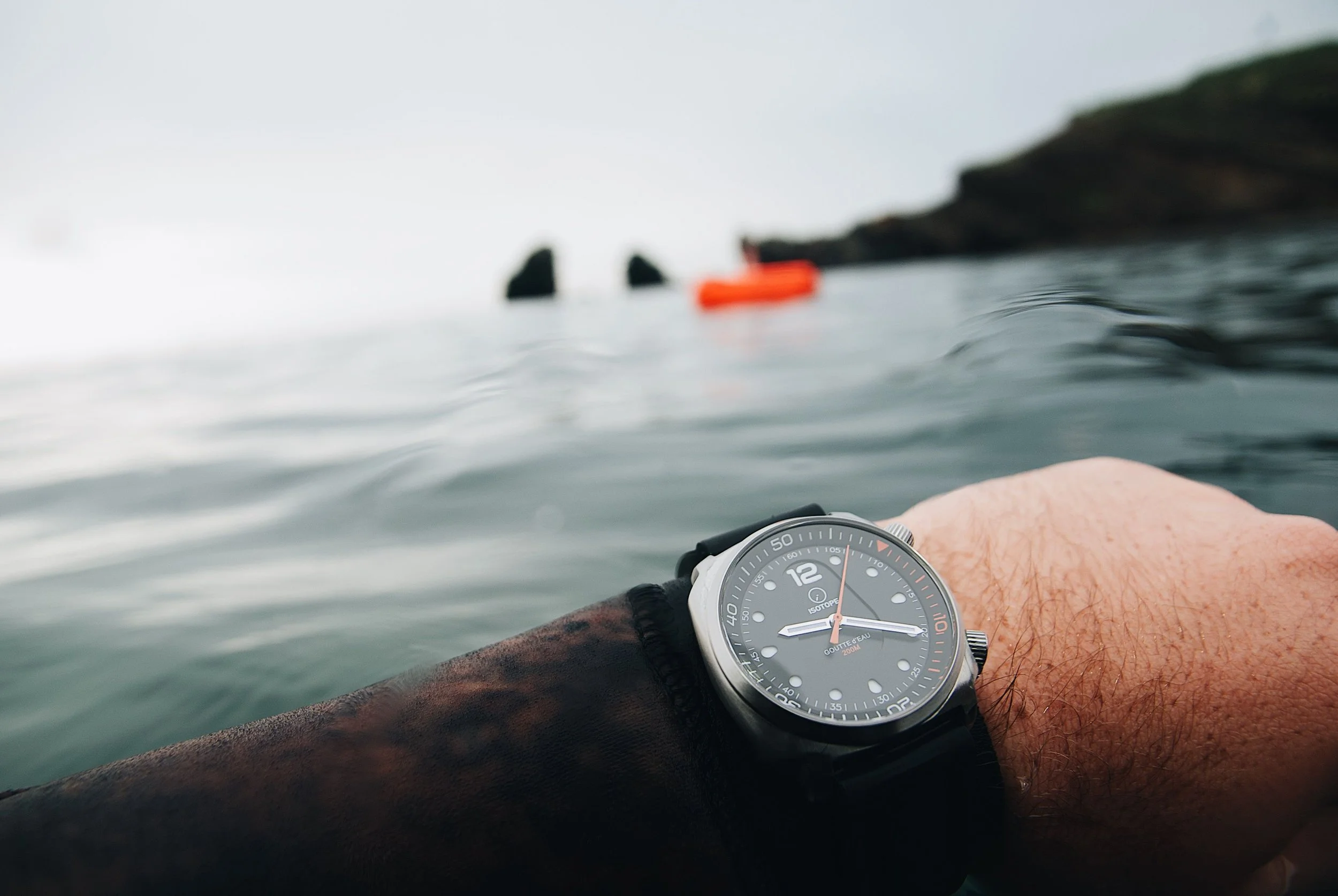
Have you bought a dive watch and now worry it will fail underwater? A professional dive watch must resist water to at least 200 meters. This post will explain the key features, how they work, and how to pick a reliable model.
Read on to learn what matters most.
Core Features of Professional Dive Watches
Core features make professional dive watches stand out. They ensure safety and performance for divers in tough conditions.
Water Resistance of 200 Meters or More
A 200-meter depth rating proves a watch can handle serious water pressure. Manufacturers test cases, crowns, and gaskets to confirm the depth rating. This level of water resistance suits professional standards for many dive watches.
ISO 6425 requires specific tests for diver's certification. Tests include a condensation test, thermal shock, and checks for screwdown crown sealing. Divers count on reliable water resistance and a clear depth rating when working underwater.
Unidirectional Rotating Bezel
The unidirectional rotating bezel lets divers track elapsed time. It turns only counterclockwise to prevent added dive time. This design keeps safety high during underwater missions.
The bezel aligns with the minute hand at descent.
Large, high-contrast markers show five-minute and one-minute intervals. Many bezels use luminous paint for low-light readability. ISO certification and condensation tests often include bezel checks.
The bezel pairs with water resistance and depth rating to meet professional standards. Next, the screw-down crown improves sealing for depth ratings.
Screw-Down Crown for Enhanced Sealing
Screw-down crowns thread into the case to seal the winding stem. This action boosts water resistance and helps meet depth rating requirements for dive watches.
Divers use this feature to stop water entry and reduce the chance of condensation during a condensation test. Manufacturers cite screwdown crown systems to meet professional standards and to add reliability to a diver's timepiece.
High-Contrast, Luminous Markers for Legibility
High-contrast, luminous markers help divers see their watches in low light. These features improve legibility underwater and during night dives. Bright colors like white, yellow, or green stand out clearly against the dark watch face.
The materials used for luminescence charge quickly in bright conditions and glow for hours. This visibility is essential when checking dive times or depths.
Professional dive watches must meet strict standards for brightness and clarity. Strong light sources enhance readability at great depths. With these markers, divers can easily keep track of time while exploring deeper waters.
Advanced engineering also ensures that these luminous features are dependable under pressure and harsh conditions. Next, we will examine advanced engineering standards that support these features in dive watches.
Advanced Engineering Standards
Professional dive watches meet strict engineering standards for safety and performance. They rely on ISO certification to prove their reliability underwater. Many use anti-magnetic shielding to keep time accurate, even in harsh conditions. Some models feature a helium escape valve for deep saturation dives. These elements increase the watch's appeal and ensure it can handle challenging environments. Explore more about these impressive features!
Compliance with ISO 6425 Certification
One popular choice among professionals is the Aquastar Benthos, known for its exceptional durability and precision underwater.
ISO 6425 certification is a key standard for dive watches. This means the watch meets strict rules for underwater performance. A certified watch must resist water up to at least 100 meters.
It also needs a unidirectional bezel that helps track time spent underwater safely. High-contrast indicators ensure readability in dark waters.
Anti-magnetic features are important too, as they protect the watch from electronic devices. The certification includes tests like the condensation test which checks if moisture enters the case during dives.
Watches with this certification often include a helium escape valve, useful for professional saturation diving. These features provide divers confidence in their gear's reliability and safety during deep-sea adventures.
Anti-Magnetic Shielding for Accuracy
Anti-magnetic shielding helps keep dive watches accurate. Strong magnetic fields can interfere with a watch's movement, causing timekeeping errors. Many professional dive watches have special features to guard against this effect.
These watches use materials that block magnetism or designs that minimize its impact. This technology ensures that divers can rely on their timepieces in critical situations. Accuracy is key when monitoring depth and timing underwater.
A watch designed for high performance must withstand various conditions, including magnetic interference.
Helium Escape Valve for Saturation Diving
A helium escape valve helps release trapped gas during saturation diving. Saturation divers spend long periods under high pressure, often in a mix of gases, including helium. As they ascend, the helium can expand and cause damage to the watch if it cannot escape.
This valve allows the gas to exit safely without affecting the watch's water resistance.
Professional dive watches that feature this valve meet strict ISO standards for diving safety. They ensure reliability even in extreme conditions. Divers trust these watches because they offer durability and accurate timekeeping when underwater exploration is crucial.
Materials and Durability
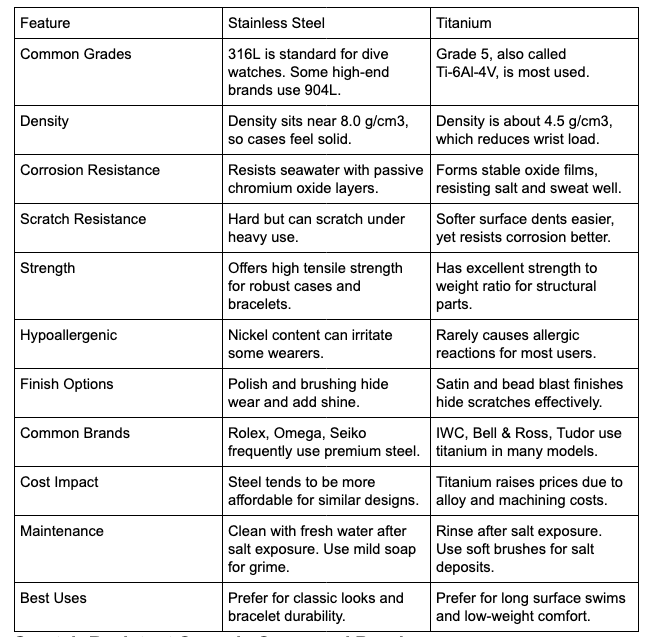
Dive watches need strong materials to resist tough conditions. Stainless steel or titanium keeps them safe from rust and damage.
Corrosion-Resistant Stainless Steel or Titanium
Materials determine durability and comfort.
Scratch-Resistant Ceramic Cases and Bezels
Scratch-resistant ceramic cases and bezels offer great durability. These materials help protect watches from scratches and damage. Ceramic is lightweight yet strong, making it ideal for professional dive watches.
The surface stays smooth, even after years of use.
Ceramic also resists fading from sunlight. It maintains its color despite harsh conditions underwater or on land. This feature enhances the longevity of a watch while keeping it looking new.
Dive professionals can rely on this material during their adventures at sea without worrying about wear and tear.
Conclusion
Professional dive watches are built for serious underwater use. They offer key features such as high water resistance and unidirectional bezels. These watches ensure accurate timekeeping in extreme conditions.
With durable materials and easy-to-read displays, they meet tough standards. A quality dive watch is both reliable and essential for any diver's toolkit.